Showing posts with label mad men. Show all posts

Monday, April 08, 2013

Mad Men "The Doorway:" Blue Hawaii

Don (Ho) contemplates the pu-pu of his former life.
I'm not sure what I'm supposed to think here, having been led through two hours of metaphorical hoops that started out as an odd Brady Bunch episode and ended at a destination that wasn't far from where we left off last season (or the season before, for Don anyway). But... Mad Men is indeed back!

It's six months or so later from where we last left off -- now late 1967, at a point where we've thankfully skipped over the "Summer of Love" (with only the fungal spread of sideburns to show for it). "The Doorway" uses the title as a metaphor for all sorts of passages. There's the a dance at the doorway of death to start the episode -- likely meant to trick you into thinking Don was having heart attack -- in the form of Don and Megan's doorman. Metaphorical-hammer-to-the-head much? There was an actual death, of which Roger took the emotional brunt of after manifesting the "doorway" metaphor in his therapy. (No good title inducer goes unpunished.) And there's the advancement of careers for Peggy (at new agency as head copywriter), Megan (now a soap opera star of sorts) and Joan -- who has broken Sterling Cooper Draper Price's glass ceiling yet still can't garner the respect of Harry (who looks like he just stepped off the set of Bewitched).

Musically, there's a lot I haven't digested as of yet, but the final song -- as is often the case -- has its own story to tell. Elvis Presley's rendition of "The Hawaiian Wedding Song" serves as a nice bookend to the Don scene on the beach along with the movie it was from, Blue Hawaii, being about a soldier's journey upon returning from war (an intentional parallel for Elvis himself at the time). Throw in a little infedelity (with an older, time-travelling Lindsay Weir!) and add to that the movie's location being the very same Waikiki beach we see Don and Megan on and you have what is pretty much the perfect song.

Elvis Presley - "Hawaiian Wedding Song"

Monday, June 11, 2012

Mad Men "The Phantom": It won't be the hot tooth that kills you, Mr. Bond

Don Draper (Jon Hamm) lights up, which feels like it's how nearly every Mad Men season finale ends.
Compared to prior seasons, Mad Men's fifth seems a bit of an odd one. After the extended layoff, we got murderous fever dreams from Don, Roger taking LSD, and Joan accepting an indecent proposal, Lane's harrowing end -- all scenes that might feel out of character in any other season. For the finale, we get the ghost of Don's (Dick's) brother Adam, lecturing him while out on laughing gas. Between having Adam spell out Don's hot tooth metaphor for us and Pete's "temporary bandage on a permanent wound" speech to Beth, the finale really took the bite out of critical analysis. Lucky for me, there was music.

Playlist: Season 5 of Mad Men (Spotify)

The turn to fantastical after four strong seasons really made the use of the theme to You Only Live Twice to "montage out" the season all the more appropriate. Like Mad Men, the fifth installment of the 007 series really "went for it," feeling invincible after the one-two punch of Goldfinger and Thunderball put the franchise -- and the spy genre as a whole -- on top. They hired the fantastical children's author Roald Dahl to adapt Ian Fleming's last published James Bond novel (in his lifetime, anyway), and Dahl tossed out most the plot (except Bond faking his own death, which fits nicely into Mad Men's back story for Don) and took it over the top. The ultimate was the building a lair for SPECTRE inside a volcano (requiring a $9+ million set build from designer Ken Adam). The film did well at the box office (the first Bond film to be released during the lucrative summer season in the U.S.), but is never remembered as a good Bond film. What it got right, though, was the music, employing John Barry for the first of many soundtracks, with the sultry Nancy Sinatra giving the title song just enough kick.

In parallel to Mad Men's fifth season, while the AMC series certainly didn't have an overflowing budget, I can't help feeling Matthew Weiner was emboldened by four straight Emmy wins for best drama, and channeled his own inner Dahl for some of Mad Men's more fantastical elements this year.

Another Bond film gets referenced in the season finale, as Don runs into Peggy similarly "clearing the clouds" at the theater, taking in the messy Bond satire Casino Royale. Employing five directors and Ian Fleming's original choice for Bond, David Niven, Casino Royale made Dahl's crazy script for YOLT seem like Jane Austin. Critically panned at it's release, the film has become a cult classic of sorts, and you'll probably have better luck "clearing clouds" with it than it's 1967 Bond counter-part. Ironically enough, You Only Live Twice spawned the more recent Bond spoofs, the Austin Powers series, with its volcano lairs and bald bad guys (Dr. Evil is only slightly more funny than Donald Pleasance's camp take on Ernst Stavro Blofeld).

If anyone wants to spoof Mad Men, I guess this is the season to draw inspiration.

After re-reading this, I feel the need to point out that I don't think this season was terrible at all, just the odd duck in the series thus far.

Previously: "Christmas Waltz" (Episode 5.10)

Monday, May 14, 2012

Mad Men "Dark Shadows": Just help yourself to some...

"I got a million of them" says Michael (Ben Feldman) to Don (Jon Hamm). 
What little we've seen of Betty Francis this season has, quite frankly, been just enough, thanks to Weiner's efficient use of the divisive character. Since the theme of this episode centers around jealousy and selfishness, it only makes sense, then, that she resides at "Dark Shadows"' chewy center.
"I don't care what's down below, Let it rain, let it snow, I'll be up on a rainbow, Sweeping the clouds away!"
- "(Up on the Top of a Rainbow) Sweeping the Clouds Away" - Maurice Chevalier [Google Play]
Maurice Chevalier's song about "helping yourself to some" happiness is a perfect fit to close out the episode, as Chevalier's protagonist admits to not caring about the blow-back on others that cloud chasing causes. That was often the case with Chevalier's own persona -- the character he portrayed on stage was always happy-go-lucky, but it belied a depressed and insecure man, getting metaphorically rained on underneath that 'cloudless' front.

Spotify Playlist: Mad Men - Season 5 (so far)

After seeing how great things appear to be between Don and Megan, Betty tries to stir up some dark clouds, selfishly using her daughter to drive the planted wedge in. But Megan, like the toxic smog that has enveloped the city, knows to keep the windows closed. "Don't give her the satisfaction of poisoning us from 50 miles away," she wisely advises Don. Loved that Sally came to a full realization of what Betty was doing and shut the door on her attempt at sabotage, delivering her lines about Anna Draper like the good student actress she is via Megan's tutelage.

WDCW Creative Director Matt McCain on The Pitch
There's jealousy abound, in the office, principally with the older set feeling outshined by the youth. In each case (Roger with Pete, Don with Michael) it leads to a selfish helping of oneself. "It's every man for himself," explains Roger to Peggy, who's displayed her own jealous streak on a few occasions so far this season (of Megan, of Michael, and -- albeit grudgingly -- of Don). Don abused his power as boss to push his own mediocre creative over Michael's, but he might just be right in assuming the client was going to like his better. If we've learned anything from AMC's The Pitch, where the client is concerned, the most creative execution isn't likely to win the day. (Pictured is WDCW's zombie-themed Subway execution, featuring former co-worker and friend Matt McCain as a breakfast zombie -- aka, zAMbie.)

Previously: "Lady Lazarus" (Episode 5.08)

Sunday, May 06, 2012

Mad Men "Lady Lazarus": Tomorrow Never Knows

Pete Campbell (Vincent Kartheiser)
"When did music become so important?"

Just how much of Mad Men's budget went toward licensing The Beatles' "Tomorrow Never Knows," which helped end "Lady Lazarus"?* As pointed out several times in the episode, getting a Beatles' song licensed is pretty much out of reach, and times haven't changed much at all in that regard. So it was interesting to see a song finally put to use.

*UPDATE: FORBES reports the total amounted to a cool quarter million dollars.

Interesting that Megan told Don to start with the closing track on Revolver, as I'd think that would be the worst place to start at that time. But since Don wants a crash course in "what's now," the choice works. And in the context of a song choice for the episode, it works as well, backing Pete's visual rendezvous with his commute buddy's wife. The condensation heart was a nice touch. Between the droning single chord, backwards guitars and sitar, "Tomorrow Never Knows" helps cement the more radical cultural movement happening during season 5. The song, like Roger's new outlook, came as the first result of a Beatle taking LSD. John Lennon followed instructions from The Psychedelic Experience: A Manual Based on the Tibetan Book of the Dead, even borrowing a line from the book, specifically from the line "When in doubt, relax, turn off your mind, float downstream". Can you blame Matt Weiner for bringing back the song in the closing credits? I mean, you've already shelled out the cash, might as well try and get your money's worth.

Not sure the song did anything for Don, who's playing catch up, like he did with poetry and French New Wave cinema a season prior. Funny that a song from 1937 (The Wedgewoods' "September in the Rain") could fool Don into thinking it was The Beatles. Music really is his blind spot.

Playlist: Mad Men Season 5 (so far) (Episode 5.08 listing below)
1. "September in the Rain" - The Wedgewoods
2. "Tomorrow Never Knows" - The Beatles [iTunes]

Previously: "Faraway Places" (Episode 5.06)

Monday, April 23, 2012

Mad Men "Faraway Places": Oh the places you'll go!

My name is Roger Sterling and I have taken LSD... Please Help Me!

From the start, you could tell this was going to be a different kind of Mad Men episode. Between the non-linear sequencing* and the advanced drug use (Ok... who had Roger in their pool as the first Mad Men principal to drop LSD?), "Far Away Places" represented another example of the series experimenting this season.

*Normally, breaks for commercials aren't annoying when it comes to Mad Men episodes, but it was trying in this one thanks the non-linear trick. Even forwarding through ads via DVR made it more disorienting.

Speaking of experimentation, it was certainly appropriate to hear Brian Wilson singing the Beach Boys' "I Just Wasn't Made For These Times" on the reel-to-reel*. Wilson's never fully recovered from his multiple trips, but for at least a couple years (namely Pet Sounds), the drug did wonders for his music. The drug does wonders as Roger and Jane's marriage counselor, allowing them to turn on, tune out and drop their marriage.

*I sadly didn't catch what Russian tune was playing out of Roger's vodka bottle, or what tune the Beach Boys' song melded into before cutting to Roger and Jane in their car. Anyone pick up on those?

The title of the episode refers to the various 'trips' that were taken, be it metaphoric Africa (in the referenced films of The Naked Prey and Born Free) for Peggy, Mars for concentration camp baby Michael, Roger and Jane's LSD trip, or the HoJo trip for Don and Megan. The two contrasting African films premiered in June of 1966, but aside from their settings (South Africa and Kenya, respectively), they were quite a different beast. Peggy's boyfriend wants to see The Naked Prey, but Peggy sees Born Free solo, as if her psyche processed his request for a manly adventure tale into something more akin to her emotional level -- lion cubs set free and left to fend for their own. Like Don leaving her in charge of the Heinz pitch, things could go easily go sideways.

Like Don kicking in another door (note how Don and Megan's landing on the floor parallels Roger and Jane's post-bath pose):


Previously: "Mystery Date" (Episode 5.04)

Monday, April 09, 2012

Mad Men "Mystery Date": Felt Like a Kiss

Greg lights one last cigarette for Joan, before she finally lights a fire under his ass.
While the first few episodes this fifth season of Mad Men have had their themes, none have been as tied together as last night's "Mystery Date" was. The main theme being a misogyny, sex and violence; with the grisly murders of Richard Speck (July of 1966) serving as a historical backdrop and The Crystals' "He Hit Me (and it Felt Like a Kiss)" leading us into the closing credits. In between, we have the newly hired Michael being disgusted by the Speck crime scene photos, which is later contrasted by his being fascinated with his own dark Cinderella-as-wounded-prey ("she wants to be caught") commercial pitch for a footwear client. Meanwhile, Sally and her Gran-in-law shared a horror/fascination with the subject, with Paulina perhaps a bit too much enthusiasm for the sexual aspect of Richard Speck's acts. The final one remained unsaid, as Joan gave a callback to getting raped by her (then) fiance Greg ("you're not a good man... and you know what I'm talking about"). It acted as a final kick-in-the-pants to get that absent father out the door for good.

The use of "He Hit Me" through the credits worked some magic, coming on the heels of Joan's own dealing with domestic abuse. The Crystals original was engineered by the legendary Phil Spector, someone who's no stranger when it comes to domestic abuse, and was written about Little Eva ("The Locomotion"), who served as a babysitter for the married Brill Building hitmakers Carole King and Gerry Goffin.

The title, "Mystery Date," manage to operate thematically as well. The title was pulled from a TV commercial Sally was watching, done for the classic game of the same name, but it also tied together several scenes. There was Don's fever dream of Andrea (played by Madchen Amick of Twin Peaks fame), Greg knocking on his own door, and Peggy's unplanned sleepover with Don's receptionist Dawn.

Speaking of Peggy, was there a better scene last night than the one of her and Roger? Count your money, Peg! (In today's dollars, that $400 would amount to around $2700 -- Roger routinely carries that amount in his wallet!)
"It's not like TV...it takes over three minutes and you have to have a lot of strength."
Serial killer Richard Speck describing the strangling of his victims.

Don's fever dream scene (video below) was quite a bit to take in. Luckily, it seemed obvious that it couldn't be real, but for a moment I was thinking "Don needs another secret?" Besides the spectacle of Don strangling a former lover, the scene had elements that tied it back to what was going on elsewhere. Pushing Andrea under the bed with just the one shoe poking out acted as both as another reference to Cinderella and a kind of reversal of the one survivor in the Speck massacre, where the nurse survived by hiding under the bed.


Delving into Richard Speck's life provides a treasure trove of material in the misogyny/violence/sex sphere, especially how his final days played out. But that's a post for another day (ie, to remain in my head).

Previously: "Tea Leaves" (Episode 5.03)

Sunday, April 01, 2012

Mad Men ("Tea Leaves"): Exile on Madison Ave

Megan (Jessica Pare) and Don (Jon Hamm) patronize Heinz's wish to have The Rolling Stones as pitchmen.
Tonight marks the directoral debut for one Jon Hamm, and while he did a marvelous job, this third hour into the season for Mad Men is one that set the world on fire. No big pieces were being moved forward, unless you count the introduction of new copywriter Michael Ginsberg (Ben Feldman), hired to work the Mohawk Airlines account (you know this character is going to contribute more than just a bit to the season, thanks both to his bipolar interviews and the immediate look in on his home life). Outside of that, we're left to again catch up with and/or hang out with characters, this time getting Betty (January Jones in fat makeup!) back into the picture. "When is everything going to get back to normal?" asks Sally at one point, echoing us all a little bit.

One bit that always piques our interest is characters attending a concert. In season three, we had an art director go see "the" Bob Dylan; in season four, Don took Sally to see The Beatles' Shea Stadium concert; so it only makes sense that we now get a Rolling Stones concert. Seeing Don and Harry backstage was amusing, as Harry still thinks he can identify with the youth market, yet is easily duped by faux Stones. When one groupie scoffs at the notion of the Stones doing a TV jingle, Don points out that they've done it before, selling cereal in England just three years prior.

And that ad? An original song written to hawk Rice Krispies cereal, here in all its 1963 glory:

"Wake up in the morning and there's a crackle in your face." That's what your groupie said.

Hello, do you deliver ice cream?
While "Time is on my Side" was referenced in the episode as the song Heinz wanted rewritten (as "Heinz is on my side"), the song never actually made it on the soundtrack. The only track we get is The Sound of Music's "Sixteen Going Seventeen," reminding us again that Betty is a full grown child. The sequence leading up to the song, though, was pretty well thought out, with different characters receiving "good news" in a variety of ways. Betty responds to finding out she doesn't have Cancer with more depression -- thinking it was an excuse for her weight gain.* Roger has his own understandably angry reaction to Pete's version of the Mohawk Airlines "good news," while Michael's dad jokes that they should get prostitutes to celebrate his new job, quickly transforming the moment into an opportunity for prayer.

Playlist: Mad Men Season 5 (Episode 5.03)
1. "Time is on my Side" - The Rolling Stones
2. "Sixteen Going on Seventeen" - Charmain & Dan Truhitte from The Sound of Music

*How ironic to see Sally eating just a few bites of her sundae and pushing it away, while Betty eagerly finishes it off. It wasn't that long ago she was chastising her daughter for being overweight.

Previously: "Zou Bisou, Bisou" on iTunes and Vinyl / "A Little Kiss" (Episode 5.01-5.02)

Monday, March 26, 2012

Mad Men: "Zou Bisou, Bisou" on iTunes, Red & Black Vinyl

Jessica Paré as Megan performing "Zou Bisou, Bisou" on the season 5 premiere of Mad Men
In a fairly bold marketing move, Lionsgate has released the much talked about "Zou Bisou, Bisou" performance by Jessica Paré as Megan from last night's Mad Men season five premiere. While releasing it digitally on iTunes is hardly bold, releasing it on limited edition red or black vinyl certainly is. It's a niche market to be sure, but a cool demographic nonetheless. I know I'm tempted, but I fear that it won't work as well without the Jessica Paré visual to go with it.

But which is bolder? That marketing move, or Megan seemingly turning the tables back in her favor by, um... housecleaning the French way? "Zou Bisou, Bisou" may be an earworm in folks' ears, but this scene has far more significance going forward.

"Don't look at me!"
Previously: "A Little Kiss" (Episode 5.01)

Mad Men - "A Little Kiss": Music à la Mode

It's been far too long, my dear old friend -- three fingers of MaCallan 18, in an old fashioned. Oh, and Mad Men as well, as it's the long awaited fifth season premiere that brings my bottle of scotch out of hiding once again. So what is it now, June of 1966? Watching the "Previously on..." I realized how much I've forgotten in the two years we've been apart. Even more than in year's past, Matthew Weiner was content in easing us back into things, letting us hang out with old friends, catching up on what's been going on since we saw them last.

Megan has obviously had an effect on Don, first from looking at the decor in the apartment, then the look on Sally's face watching her dad and Megan interact (and Don's making breakfast!); and in Draper's much more relaxed demeanor in the office. This 'catching up' scene was backed by organist Ken Griffin's "Marea Baja," an artist who died too early in the 50s but continued having albums released by Columbia for another decade (one could say that Ken Griffin was the Tupac Shakur of his day and be sort of right).

The musical moment everyone will be (already are) talking about is Megan's performance of the French song "Zou Bisou Bisou," originally performed by 16-year old Gillian Hills. Part of the French "yéyé" pop movement, the song would've been a hit just a few years prior in Quebec, where Megan's from. Gillian Hills version was much more restrained, to say the least (video below), but Megan's sultry take on it in fishnet stockings is one of our first truly 60s moments in the show, where we finally feel pulled into what we think of when the decade is brought to mind. The 60s has always hovered at the peripherals, but in the world of Sterling Cooper, it has remained in the 50s until now. Maybe it's the fact that it's the first opportunity I've had to see it in HD, but the set and wardrobe colors seem much brighter -- further evidence of that decade's late arriving cultural shadow.

As Sterling Cooper Draper Pryce deal with the reality of their Equal Opportunity Employer gag ad, Dusty Springfield's "You Don't Have to Say You Love Me," her first HUGE hit after which (released in March of 1966) she became the biggest selling female artist in the world, making her an appropriate choice to further set that year as our new setting.

Playlist: Mad Men - Episode 5.01 (Spotify)
1. "Marea Baja" - Ken Griffin
2. "Zou Bisou Bisou" - Gillian Hills (sung by Megan at Don's birthday party)
3. "You Don't Have to Say You Love Me" - Dusty Springfield

UPDATE: The song as performed by Jessica Pare is now available both from iTunes AND on vinyl (in red or black) via Insound.


Previously: Mad Men - "Tomorrowland" (Episode 4.13)

Wednesday, October 20, 2010

Mad Men "Tomorrowland": Advertising Marriage, Babe

I was going to let the season four finale for Mad Men go without comment, seeing as how I was late to watching and even later synthesizing my thoughts on it. But after reading several posts on it and seeing Groundhog's Day get bandied about in association with the song over the closing credits (PLEASE!), I felt the need to at least outline a post.

Luckily for all of us, Ann Powers from the LATimes' music blog Pop & Hiss set the record straight with their analysis of the song use for "Tomorrowland," which I'll just point you to in lieu of finishing my post -- she's synthesized my thoughts better than I could at this point, with the song choice having to do with the singers' marriage fantasy versus reality, and what that means for the new Mr. & Mrs. Draper in the mid-60s.

Mad Men - Episode 4.13
"I Got You Babe" - Sonny & Cher [download]

Outside of song choice, there are two other posts that resonate with my reading of the finale (and the season in general) and the first is from Heather Havrilesky (Salon), who points out Don's Madonna/Whore attraction to Megan. My own contribution here is to go back and look at the director cues for this, going back to when we first meet her. Every meaningful look that Don makes towards Megan's way she's either dolled up to go out on the town or playing/taking care of his kids. The other post I envy comes from Matt Zoller Seitz (for The New Republic) who encapsulates the Don / Peggy dynamic (nearly) perfectly. He also stumbled on the Groundhogs Day thing, but he doesn't suggest Matt Weiner or someone from Mad Men had that intention, so we'll let that one slide.

Previously: "Hands & Knees" (Episode 4.10)

Sunday, September 26, 2010

Mad Men "Hands and Knees": Clearance Issues

Or, I could have easily titled it "Do You Want To Know a Secret," thanks to the use of The Beatles' song of the same name -- an instrumental cover version, of course, because Lionsgate/AMC likely couldn't afford the real licensing fee. This high cost of clearance fit in nicely with Don and his G.I.-man induced panic attack.

Of course we knew The Beatles would have to make an appearance in some regard (they were mentioned in passing earlier this season), and the first Shea Stadium show from 1965 is the obvious choice, occurring at the height of Beatlemania.

Mad Men - Episode 4.10
1. "Do You Want to Know a Secret" - Billy J. Kramer (in lieu of the instrumental version used on the episode)

Previously: "The Summer Man" (Episode 4.08)

Tuesday, September 14, 2010

Tuesday, September 07, 2010

Mad Men "The Suitcase": Is It's Own Reward

"There's a way out of this room we don't know about."

I was late to catch both the previous week's "Waldorf Stories" along with the more recent (and stellar) "The Suitcase," so it's not likely I can add much to the mix of criticism that hasn't already been written. But there was a thought I had while watching "Waldorf Stories" and associating it with the simultaneous broadcast of the Emmys, and that's the parallels between creator/uber-writer Matthew Weiner winning an Emmy last year with his own Peggy (writer assistant turned staff writer Kater Gordon). Weiner seemed annoyed by Gordon's presence on stage and then shortly afterwards, she ended up being canned. With Don's asshole turn after winning the Clio, Peggy feeling unappreciated, and this week's (sort of) resolution, the story almost seems like an apology for what happened with Kater Gordon. Maybe I'm reading too much into it, but the timing of the episode with this year's Emmy broadcast seemed like a tell.

"The Suitcase" ended to the sounds of Simon & Garfunkel's "Bleecker Street", which was a timely song, but I've yet to crack the puzzle as to the subtext it might add to the content of the episode. "Bleecker Street" employs a lot of biblical references, between the "shroud" the "shepherd" and the poet selling out for $30 (a reference to Judas' betrayal for 30 silver pieces).

Previously: "The Good News" (Episode 4.05)

Tuesday, August 24, 2010

Mad Men "The Chrysanthemum and the Sword": Guilt vs Shame

The book from the episode title, The Chrysanthemum and the Sword: Patterns of Japanese Culture, that everyone is supposed to read, is a famous post-war study of Japanese culture that helped popularize distinctions between guilt and shame societies. According to the (since questioned*) study, Japanese are ruled by a shame culture, and Don picks up on this and uses it after they're already out of the running (thanks to Roger's shameful outbursts). Shame is intrinsically a negative tool in upbringing in that it lowers self-esteem, but it's effective in maintaining subservient employees.

*It's probably best that Roger didn't read the book as this classic "anthropology at a distance" would've just reinforced many of his prejudices.

Sally's story, while delving a bit in shame (mostly what Betty feels thanks to her sad upbringing), is governed by the Western world's predominant guilt culture. For instance, as Betty lays it out for Don on the phone, sex is bad unless you're married. Sex (and, it's younger sibling masturbation) is (are) one of the predominant guilt culture contradictions. Going even further, you'll notice several references were made to the Civil Rights movement, and that was a fine example of the use of guilt to push forward positive societal change -- by making the general population feel guilty about how another group is being treated.

No time for full analysis mode (which hasn't been triggered here, probably, since the extensive delving of seasons one and two), so here's some bullet points:
  • "Who is Dr. Lyle Evans?" Turns out Roger Sterling's angry reference in early part of "The Chrysanthemum and the Sword" was a Google bomb thrown in from the writers. Searches for "Dr Lyle Evans" and "Lyle Evans" spiked during and after the broadcast, but there was nothing really to find, except folks asking "who is Dr Lyle Evans?"
  • Favorite exchanges of the night both featured Joan: "They're not very subtle are they?" Joan says, referring to the clients. "No, they're not," responds the translator, looking at her Joan's ample bosom. Add to that Joan's exchange with Roger and you have the most efficient use of a character.
  • Unless you count Peggy's ride around the stage on the Honda motorcycle (and you should... bravo).
  • This episode moves us up in the timeline to mid-March, 1965, as evidenced by newspaper headlines and an episode of The Man From U.N.C.L.E. (which aired March 15).
  • "Help Me Rhonda" was also referenced, as the Beach Boys album The Beach Boys Today! was released in March, but the referenced single wasn't released until a month later, so perhaps it's a bit of a stretch to mention the song. The recording of that track was famously interrupted by daddy Murray Wilson, who should be part of a Shame vs Guilt study of parenthood.
  • Rogers and Hammerstein's "I Enjoy Being A Girl" (from Flower Drum Song) closed out the episode. On it's face, it seems simple enough, but the song is actually about growing up Chinese in America. Wrong country, but it's Asian nonetheless
Previously: "The Good News" (Episode 4.04)

Tuesday, August 10, 2010

Mad Men "The Good News": For People Who Love Bad News

"Though things have been precarious financially, it’s been a magnificent year," says Lane Pryce, illuminating the only real "Good News" this week's episode had. "May you live in interesting times," goes the famous Chinese proverb/curse, and 1964 seems to have been all that (and a bag of s$#t) for the episode's primaries -- Don, Lane and Joan.

I get the feeling this episode had a checklist of back story that it was to fill in for us, and it did so rather clumsily (which might be a first with Mad Men). We're already aware of just how bad it's been for Don, that's been hammered into us with the first two installments of the season, but it turns out that chap Lane has had a rough go of it himself with the ol' trouble and strife. And, as we might have suspected, Joan's reality of a married life is far from her ideal. But it was nice to find out that Greg isn't as bad a surgeon as we (and Joan) thought. Aside from the tone deaf "filing papers" comment, his bedside manner and efficient stitching up of Joan's finger surprised her, and made the prospect of him leaving for Vietnam seem even more real.

We also get another trip to the W(B)est Coast for Don, which means 1) Anna, so Dick Whitman is let loose; 2) More colors in the palette! 3) Another young nubile temptress (Stephanie) who spouts heavy-handed lines to suggest the coming cultural revolution. Comments on the sit in at Berkley, Jan & Dean and being an anti-consumer dropped like coins in a tin can. "Nobody knows what's wrong with themselves, and everyone else can see it right away," she says at one point, drawing a not-so-dotted line into the over-arching theme of Mad Men. One thing that comment does, though, is make what Anna says a little later that much more special: "I know everything about you and I still love you." Anna knows all about Dick, but Dick knows all about Anna too, that she's dying of cancer. I have a hard time believing that Anna doesn't know, considering she's been going to the doctor all her life, so perhaps it's a shared secret that neither of them knows the other one is in on.

Back to Stephanie, besides Jan & Dean ("Sidewalk Surfin"), she plays Patti Page's "Old Cape Cod" to tease Dick about his age (is an 8-year old song already an oldie?). The song's theme naturally fits in with one of the episodes themes, that of 'getting away from your troubles.' Don/Dick's Cape Cod we already knew is Anna's place, where he can be himself and grounds himself before starting his next chapter. Back on the drab colored East Coast, Don offers Lane his own bit of Cape Cod escapism with a romp around town, and thanks in large part to a steak belt buckle, my memory of this episode will forever be favorable. (Lane for the save.) Just like Don with his trip to L.A., Lane seems refreshed the next day, ready to put the past behind him, and Joan is right on queue with "Gentlemen, should we begin 1965?"

Minor quibble, while it was hilarious to see Don & Lane go from thinking about going to see The Umbrellas of Cherbourg and ending up at a Japanese monster movie. The movie appeared to be footage of Gamera, but that film didn't get its U.S. premiere for another two years. Instead, they probably meant for the film to be Mothra vs. Godzilla, which opened in New York around Thanksgiving in 1964 (as Godzilla vs The Thing).

Mad Men - Episode 4.03
1. "Sidewalk Surfin" - Jan & Dean
2. "Old Cape Cod" - Patti Page
3. "Waves (Antonio Carlos Jobim)" - Oscar Peterson

Previously: "Christmas Comes But Once a Year" (Episode 4.02)

Monday, August 02, 2010

Mad Men "Christmas Comes But Once a Year": Here's Your Bonus [RIP Mitch Miller]

"Reminds me of when I was a kid, and at Christmas I'd get what I wanted."
Lee Garner, Jr.

Any episode involving a party at work is bound to be eventful, and "Christmas Comes But Once a Year" did not disappoint. Besides the holidays, there were several themes tying the episode together: powerlessness, alcoholism and gift giving are what come to mind. And it's the return of Fab Fave Freddy Rumson that nails all three themes in one. Freddy "comes with a $2 million gift in his pocket," that of Ponds Cold Creme. He's also a recovering alcoholic in A.A., whose central doctrine is the "Powerless Doctrine." So, even though the story didn't revolve around Freddy, all the themes seem to emanated from our old-fashioned friend.

The powerless theme circulated around the episode, with people in different seats of power at the beck and call of their superior. Freddy (and his fraternityA.A. buddy) are powerless to alcohol, Joan answers to Roger, Roger (and all of SCDP) answer to Garner, even Glen (creepy is back!) points out Sally's lack of power in her new family structure. Meanwhile, alcoholism has sapped Don's power over women (he strikes out with both the neighbor nurse and the market researcher) so he ends up breaking one of his own taboos, dipping his pen in the company ink. Don's is very stringent about the separation of work and private life (see the marketing questionnaire), but when he's drunk and at his pad, just about any warm body will do, and Allison's at a disadvantage, wanting to keep her job (and, obviously having some admiration for her boss). The handing of the Christmas bonus, with no comment on the previous night's proclivities, came across as a transaction for sexual favors, even thought Don obviously wrote and placed the money in the card prior to his epic fail. Peggy also experienced some post-coital regret, giving herself as a gift to her creep of a boyfriend. There was a bit of power struggle going on there as well, as Peggy had 'the hand' the relationship prior. I expect their relationship to change as a result. (Hopefully Peggy will dump him, but knowing her taste in men and inability to understand diminishing returns, I doubt it.)

In an odd coincidence, the closing credits song, "I Saw Mommy Kissing Santa Clause" (sung by 12 year old Jimmy Boyd), was a production of one Mitch Miller, who had just died the day prior. Miller left a big shadow on popular music of the 50s and early 60s, with his A&R work for Columbia Records. Jimmy Boyd's holiday hit was a prime example of his sweet spot, that of the novelty song. Miller (also considered the father of karaoke) hated rock and roll... hated it. That's a big reason why he became obsolete fairly quickly as rock became the norm through the 60s. His trajectory mirrors the old-fashioned men on Madison Ave, like Freddy and even Bert Cooper, so inclusion, even as only behind the scenes, is appropos here.

Previously: "Public Relations" (and Jimmy Page)

Monday, July 26, 2010

Mad Men "Public Relations": The Jimmy Page Elevator

"Who is Don Draper"

And so begins the slight of hand intro for the fourth season of Mad Men, as he's being interviewed by a one-legged Ad Age journalist. It being the first episode and all, I'd be hesitant to draw too many conclusions in regards to the season as a whole, but the book-ending interviews certainly provided an efficient point A and point B of a Don Draper journey (References to a second floor, both in the building and in the Jantzen swimsuit ad, also seem to cleverly suggest progress.)

For the first two seasons, Don walked the line between keeping a low profile and doing great creative. Remember back in season one, just getting his picture in the paper for winning an award brought his brother into his circle, with tragic consequences. With that in mind, is it any wonder Don is a little reluctant to divulge anything to a journo? Another point of note from that interview was that the journalist was a genuine victim of the Korean war, both the birthplace and the achilles heel of any truthful discussion of "Who's Don Draper."

It's a different world, though now for Don, and the final interview suggests he might just be starting to recognize it, even if it's only an act to help the firm. Getting exposed isn't as big an issue now. First Pete, then Cooper and finally Betty all have found out the truth, and his family is all deceased (conveniently matching his fake background). Not only is there less worry over being found, but there's an urgent need for him to finally step into the light, being the face of the firm, and that's what makes that final scene such a key pivot.

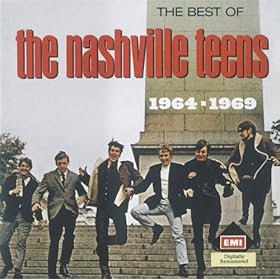
As the dialogue fades, the end credit music kicks in almost abruptly with the strong guitar of the Nashville Teens recording of "Tobacco Road." A lot of people are probably going to make the case that the song is a reference to their SCDP's main client, Lucky Strike, but I'd argue the music choice has more to do with who's playing guitar on it. A young session guitarist by the name of Jimmy Page* is banging out that riff, creating a kind of elevator between 1960 (when the song originally was written and recorded by John D. Loudermilk as a folk song) and what's to come when Page helps popularize distortion with the Yardbirds (and later, obviously, with Led Zeppelin). This season is supposed to be about change, and there's not many better examples of it than what Page & Nashville Teens bring to the recording.

*Back in his session music days, he was known as "Little Jim" to distinguish himself from another session guitarist, "Big Jim" Sullivan. 1964 was a big year for Page. Besides "Tobacco Road," he worked on Marianne Faithfull's "As Tears Go By", The Rolling Stones' "Heart of Stone," Van Morrison & Them's "Baby Please Don't Go" & "Here Comes the Night", Dave Berry's "The Crying Game" and "My Baby Left Me", Brenda Lee's "Is It True," Petula Clark's "Downtown," The Who's first single "I Can't Explain" and contributions to The Kinks' 1964 self-titled debut album.

Previously: "Shut the Door, Have a Seat" (Season 3 finale)

Monday, November 09, 2009

Mad Men "Shut the Door. Have a Seat.": Sterling, Cooper, Draper & Pryce


There are people out there who buy things. Like you and me. Then something happened. Something terrible. And the way that they saw themselves is gone. And nobody understands that. But you do. And that's very valuable.
Every season, Don has a sales pitch that says a lot about that particular season of Mad Men. That this one was to Peggy and not a client doesn't diminish the fact that it nails several truths about this season, and the characters' past. While last week's Kennedy assassination episode was light on plot, the 'something terrible' was an event that shapes this week and America going forward. It set up events in this week's episode in that it forced most to look at their world differently, accelerating change not here, but across the country.

This whole season has seemingly been about tearing Don down, bit by bit, as uncomfortable as it was at times to see. Father-in-law Gene, baby Gene, Conrad Hilton, and Betty have, little by little, taken away some control from Don's life, and much like his hair, Don's life is a product of control. Seeing him lose his temper to Peggy, in particular, was hard to see, but reflective of a man losing control (and lets not forget sleep).

The finale starts by pulling out the final pieces-- in the form of betrayals. First up, father figure Hilton breaks the news of Sterling Cooper's sale to McCann Sausage Factory* to Don, who sees deceit in Conrad's handling of him through their relationship - namely for forcing him to sign a contract, thus leaving him no convenient escape route. Next up, Betty begins divorce proceedings, pulling another relationship rug from under Don (and leading to the heartbreaking scene with Bobby & Sally, pictured above). But for every door that closes...

*Once upon a time, I worked for that sausage factory.

Sterling Cooper Draper Price, how can I help you?" "Yes Harry, it's room 435.

The episode took on the fun elements of the heist genre, like Draper's Eleven, as Don, Roger, Bert and Lane plotted out how they'd pull off their own pre-emptive betrayal. I'm pretty sure they broke a few laws in the process, and wouldn't be surprised if a lawsuit results, but it was a brilliant scheme leading to not only a reunion with Joan, but also all sorts of exciting season four possibilities. To get there, Don had to repair some relationships along the way. First Roger, who helpfully pointed out Don's problem with relationships, then Pete and finally, as opened with here, Peggy.

A great finale demands a fine ending, and seeing Don pull up to his new digs (found for him by Joan) to the strands of Roy Orbison's "Shahadaroba":
Shahadaroba, Shahadaroba
Face the future
And forget about the past
Shahadaroba, Shahadaroba
In the future
You will find a love that lasts
Previously: "Grown-Ups" (Episode 3.12)

Monday, November 02, 2009

Mad Men "The Grown-Ups": Mourning After

Definitely not my favorite episode... with so much of the plot and visuals centered around watching characters watch television, it's an understandable challenge for the writers. And given that inherent hole they had to start with, the final product turned out pretty compelling. As compelling as it can be... watching people... watch TV. Previously, Matthew Weiner had stated he was reluctant to do an episode centered around Kennedy's assassination, as he felt it was well-trodden ground. Now I see what he meant.

Sure, there was some poignant moments associated with how Kennedy's death affected folks in different ways, including the ruined wedding, but we knew the wedding was screwed after the first episode. Don't get me wrong, it is still a fine episode, but as the penultimate, traditionally the episode in the David Chase-influenced world that Weiner lives and breathes, I'm wholly disappointed.

What did work was the 'event' as a trigger for change. Betty and Don seemed to be back on track from the end of last week's episode up until the news broke of Kennedy's death. Betty and Don mourn in vastly different ways* and the two assassinations (we sometimes forget that Oswald was assassinated as well... only a public figure for a less than 24 hours, but that's all it takes) shifted the ground under Betty's feet enough for her to believe she can leave Don (we'll see).

*Don should really stop trying to play grief counselor... just not working.

Playing us out from Don's realized nightmare, was country pop sweetheart Skeeter Davis singing "The End Of The World", a song which peaked on the charts about eight months prior. "Don't they know it's the end of the world? 'Cause you don't love me any more." Don't think it's the end of the world for Don (again, we'll see).

Previously: "The Gypsy and the Hobo" (Episode 3.11)