Showing posts with label hip-hop. Show all posts

Monday, September 10, 2007

Ear On TV: Week of September 10

Will you remember where you were when Kanye West took on 50 Cent for tops of the charts on that fateful day, September 11? The pair met up for this week's issue of Rolling Stone (pictured,) comparing tomorrow's release date to a big boxing match, complete with all the chest-thumping and finger-pointing that goes with the lead up to the main event (West's Graduation, vs 50 Cent's Curtis.) 50 Cent, for one, acknowledges it's all just hype to sell the records, even copping to the lie that West was changing his release date.

Meanwhile, on the September 11 release day, they'll be both appearing on BET's 106 & Park, squaring off in a duel hosted by ESPN's Stuart Scott. Both will perform songs from their respective albums, and Scott will be there to break it down. Both artists will also hit the traditional talk show route, in fact they'll both perform on Jimmy Kimmel Live this week. 50 Cent is up first, performing Tuesday night, while Kanye stops by on Thursday night. West gets in one last appearance, hitting Ellen on Friday, like a last punch before the bell. Speaking of punches, let's hope he's calmed down after his (seemingly predictable) awards show rant last night (Kanye West Loses It Again, Says He'll 'Never Return To MTV.) Or was that more PR for tomorrow's release? If you're wondering who to root for, Hip-Hop blogger and DJ Jay Smooth has a suggestion: Neither... in fact boycott 'em all this week.

But back to the September 11 date... 50 Cent and West seem to have some memory loss when talking about it in the interview. Kanye even has the gall to think that folks are talking about the date as if he and Fiddy invented it, saying "...now people gonna remember this date for the rest of their life." As if they already didn't.

It's not all Fiddy and Kan-aye this week, though, as Spoon finally makes some appearances in support of their July release Ga Ga Ga Ga Ga. Brit Daniels and co. hit Leno on the day West and 50 Cent invented, and then play Wednesday night on Late Late Show With Craig Ferguson, two appearances that guarantee to be far more humble then the previous artists profiled.

Playlist: Picks for the week
Monday, September 10
CBS: Late Show With David Letterman: Glen Hansard, Markéta Irglová
NBC: Late Night With Conan O'Brien: Bad Religion
NBC: Last Call With Carson Daly: Glen Hansard, Markéta Irglová REPEAT
Tuesday, September 11
ABC: Jimmy Kimmel Live: 50 Cent
BET: 106 & Park: Kanye West, 50 Cent
NBC: The Tonight Show with Jay Leno: Spoon
NBC: Late Night With Conan O'Brien: Chesterfield Kings
SYNDICATION: Live With Regis and Kelly: Lyle Lovett
Wednesday, September 12
ABC: Jimmy Kimmel Live: Modest Mouse
CBS: Late Late Show With Craig Ferguson: Spoon
NBC: The Tonight Show with Jay Leno: The Bravery
NBC: Late Night With Conan O'Brien: Lyle Lovett
Thursday, September 13
ABC: Jimmy Kimmel Live: Kanye West
NBC: Last Call With Carson Daly: Teddybears
SYNDICATION: The Ellen Degeneres Show: Rihanna
Friday, September 14
ABC: Jimmy Kimmel Live: Hot Hot Heat
CBS: Late Show With David Letterman: Chamillionaire
IFC: The Henry Rollins Show: Peaches (REPEAT)
NBC: Late Night With Conan O'Brien: The Used
SYNDICATION: The Ellen Degeneres Show: Kanye West

tags: , , , , , , , , ,

Monday, April 09, 2007

My Super Ex-Agent

Entourage returned in style last night (for it's season 3.5 premiere) and there was once again, plenty of great quotes, hidden (and not-so-hidden) cultural references, and a slew of fine hip-hop to boot.

First of all, the whole not-so-subtle metaphor of Ari as an ex-girlfriend was taken to such extremes, it was hard not to get caught up in each awkward moment between him and Vince. You just know they'll end up back together, but for now, seeing Jeremy Piven play Ari as a manic, rejected lover is going to be fun (while it lasts.)

Playlist: Entourage - Episode 313
Tracklisting

New agent Amanda (played by the delicious Carla Gugino) is feeding Vince 'nice' scripts, and they're zeroing in on an adaptation of Edith Wharton's The Glimpses of a Moon - which is, appropriately enough, about a poor couple living the high life mooching off their wealthy friends. When Amanda gives Ari the line of the night ("Want me to walk you to your car? This town's not safe for a bitch...") you can already see into the future that the tables are going to be turned soon enough. I just hope it's done without a mysognistic streak that the show sometimes falls trap to.

Did the billboard for Drama's new tv series (The Five Towns) look at all familiar? Probably not, since no one but me seemed to have been watching NBC's The Black Donnellys anyway, but the Irish brothers drama is an obvious reference to the series from Paul Haggis, who, by no coincidence, is directing Vince's dream project, Medellin (Haggis appeared on Entourage, episode 305, "Crash and Burn.")

Music-wise, since much of the story is about Vince's birthday party, the selection is party-centric. Great new hip-hop from Yung Joc and Twista are sprinkled between recent classics from Brand Nubian, Outkast, and N.E.R.D. The sounds of having fun... we know that will have to change somewhat as the series goes on.

HBO tracklisting with scene details

Previously: From Easy to Stranglehold in Twelve Acts (Season 3 on DVD)

tags: , , , , , , , , , , , , ,

Wednesday, March 07, 2007

Put that money back in your pocket

New Jersey trash-hop rapper Tim Fite recently became disgusted at the consumer-driven co-opting of hip-hop and was inspired to write a few songs about it. Mix in a few anti-Bush songs and you have a whole album's worth of lyrically-genius protest hip-hop entitled Over the Counter Culture. But what to do after that? Market and sell it like a hypocrite? H-to-the-ells no! Fite has been giving it away for free, via download at his site, timfite.com.

Download: Tim Fite - Over the Counter Culture
(the entire album zip)


Says Fite of the record:
I intended to make a record where art attacked commerce and its constituents, openly and without hesitation. I intended to make a record with an accusatory finger pointed at the world (myself included), shouting, "GUILTY!!!!!!!!" Guilty: for spending too much time on money, and not enough time on madness. Guilty: for believing in advertising so much that we have become advertisements ourselves.Guilty: for not holding up the red card of accountability and demanding change through self awareness.
There are several examples of Fite's genius at work here, in particular is the humurous song "I've Been Shot," which slyly looks at the marketing of gangster rap (much the same way that the animated series The Boondocks did last year:)
Just shoot me a little bit... make me look good
Well, not every rapper does it, but every rapper should
It's a good career move, just wait you'll see
When everybody goes and gets shot like me
His first single/video is the anti-war song "Camoflage," which declares it's a "fashion statement from a fascist nation... looks good with anything, especially a capitalist colonial commemorative pinky ring" The video is a bit geek-distracting to the message... I imagine folks assume it's a joke rap, ala Jamie Kennedy, which is unfortunate.


tags: , , , , , ,

Thursday, January 04, 2007

Breakbeat backdrop

For the handful of folks who checked out the series premiere of ABC's The Knights of Prosperity, you were not only treated to Mick Jagger yukking it up to the camera, but also repeated use of greatest hip-hop breakbeat of all-time:

"Apache" from Incredible Bongo Band.

Back in the early days of hip-hop, if you were a DJ, you couldn't be caught at block party without a copy of Incredible Bongo Band's Bongo Rock in your collection, and the song was eventually sampled in a multitude of rap songs like Run-DMC's "What's It All About" and LL Cool J's "You Can't Dance." A couple months ago, the album finally got a reissue, complete with great liner notes, along with bonus tracks.

As far as the series goes, time will only tell... the pilot showed promise, especially in the form of Donal Logue (as Eugene.) All the 70's references like Boston's "More Then a Feeling" and the Loni Anderson poster point to all sorts of future possibilities, and hopefully we'll see more of Columbian bombshell Sofia Viagra, er... Vergara, as Esperanza.

The Knights of Prosperity - 1.01 (Pilot)
1. "More Then a Feeling" - Boston - Eugene wakes up to this on his clock radio
2. "Apache" - Incredible Bongo Band - Used throughout as the Knights crime theme song

Here's Mick's first scene, which segues into the first use of "Apache":


Fun fact: The Knights of Prosperity was originally known as Let's Rob Jeff Goldblum, before Goldblum committed to the upcoming NBC series Raines.

tags: , , , , , , , , , ,

Tuesday, November 28, 2006

Makin' cocaine quiches

I had just started to pull together my "Best Albums" list and then Clipse's sophomore album Hell Hath No Fury shows up out of the blue to throw a wrench in the process... and by process I mean going back and listening to everything I'd earmarked every new release Tuesday, a task so large I'd probably need help from the 'Black Martha Stewart.'

Album: Clipse - Hell Hath No Fury

Oh, I'd heard the advance singles "Mr Me Too" and "Wamp Wamp (What It Do)" but neither gave indication of the depths that The Neptunes plunged for sounds in their production. Just listen to the chilling dense bass wall in "Trill" and the creepy piano string strum in "Ride Around Shining" - which features the lyrics:
The Black Martha Stewart / let me show you how to do it / break pies to pieces / make cocaine quiches.
The most welcoming track is "Dirty Money," which follows the brothers Pusha T and Malice as they spend their drug money on bling for their ladies. Luckily they saved some of that bling for Pharrell and The Neptunes to sprinkle throughout the album, as there's plenty here that shines.

Regardless of all the praise, though, Ghostface Killah's Fishscales is still my hip-hop album of the year.

tags: , , , , , , ,

Monday, November 20, 2006

Ear on TV: Week of November 20

"I am the Mike Jordan of recording..."
"Show Me What You Got" - Jay-Z

When Jay-Z announced his retirement back November 25th, 2003, he was going out on top. With a sold out tour, top of the charts album (The Black Album,) and Beyonce on his arm, even Jordan had to be jealous. But just like Mike, he wasn't content to watch as part-owner of the game, so he's back with a new album tomorrow, Kingdom Come, which, alas, is more akin to the Wizards-era Michael - all the talent and smarts, but none of the gravity-defying ups.

This week, Jay-Z makes his first post-retirement appearance on Ellen (Tuesday) and it's the Tivo/DVR moment of this sweeps crazy month when you factor in Ellen's other guest icon from the 90's who also retired from the game: Bill Clinton. Maybe being paired with Jay-Z's comeback will be an inspiration for the President.
"Get the f*ck out the throne you clone, the king is back!"

Playlist: TV Appearances Week of November 20
Album: Kingdom Come - Jay-Z (AOL listening Party)

Monday, November 20
CBS: Late Show With David Letterman: DJ Shadow, Q-Tip
NBC: The Tonight Show with Jay Leno: Chris Cornell
NBC: Last Call With Carson Daly: Fiona Apple (RERUN)

Tuesday, November 21
NBC: Late Night With Conan O'Brien: Robyn Hitchcock
SYNDICATION: The Ellen Degeneres Show: Jay-Z

Wednesday, November 22
ABC: Jimmy Kimmel Live: Jay-Z
CBS: Late Show With David Letterman: Lupe Fiasco, Jill Scott
NBC: The Tonight Show with Jay Leno: Nelly Furtado

Thursday, November 23
CBS: Late Late Show With Craig Ferguson: Akon (RERUN)
NBC: The Tonight Show with Jay Leno: Nelly Furtado
NBC: Late Night With Conan O'Brien: The Brand New Heavies

Friday, November 24
ABC: Jimmy Kimmel Live: Regina Spektor (RERUN)

Saturday, November 25
NBC: Saturday Night Live: Beck (RERUN)
PBS: Austin City Limits: Franz Ferdinand, What Made Milwaukee Famous

tags: , , , , , , , , , ,

Friday, November 17, 2006

Biggest midget in the game

I'm searching for any reason to watch The O.C. now that it's up against Grey's Anatomy and 30 Rock. My poor DVR can only tape two things at once and the only reason it's slotted ahead of 30 Rock right now is my weekly post on it.

Because of the Supersized NBC lineup, I missed the first half of the episode, but I did manage to catch the first five minutes thanks to a YouTube post, and the 5 stages of grief sequence was artistic - very un-O.C. like. Is this what we have to expect from Schwartz and Co. going forward? We'll see, but considering the episode was called "The Metamorphosis" we could see a more creative series from now on.

Musically, the covers project continues, this time with Syd Matters covering the Welsh band Super Furry Animals with "Hello Sunshine" and Editors taking R.E.M.'s "Orange Crush." Meanwhile, Ryan hasn't completely returned from his South of the border run (that makes two of us,) as he's now working at a Mexican restaurant, and apparently Ranchera All Stars is the house band because they contribute a whole five songs to this weeks mix.

But the song and artist I'd like to call out is Lady Sovereign, who's "Love Me or Hate Me" provided a short glimpse of the old Julie Cooper ("If you love me then 'thank you' and if you hate me then 'f*ck you'".) The self-proclaimed 'Biggest Midget in the Game' (she's 5'1") throws down some mad grime rap and helps Julie (along with tequila and some Chingy) get her grinding on the dance floor with some local youth.

Playlist: The O.C. - Episode 4.04
1. Hello Sunshine (Super Furry Animals) - Syd Matters (FOX)
2. Orange Crush (R.E.M.) - Editors (BMG UK)
3. De Un Mundo Raro - Ranchera All Stars
4. The Pageant Of The Bizarre - Zero 7
5. Ella - Ranchera All Stars
6. Love Me Or Hate Me - Lady Sovereign
7. Dem Jeans - Chingy
8. Pa' Todo El Ano - Ranchera All Stars
9. Siempre Hace Frio - Ranchera All Stars
10. Voodoo - Chelo
11. Tu Solo Tu - Ranchera All Stars
12. Love You 'Till The End - The Pogues

Previously:
Premature Turkey (Episode 4.04)

tags: , , , , , , , ,

Friday, August 19, 2005

History of Hip-Hop: The Message 1984-1992

Novel Soundtracks: Can't Stop Won't Stop - A History of the Hip-Hop Generation Broken into 4 parts (Loops)

Playlist: Loop 3 The Message 1984-1992
When kids have no father image, who filfulls that role? The drug dealer in the neighborhood? Motherfu*king Michael Jordan? Rappers come along and say, 'This is everything you want ot be. You want to be like me, I'm your peer, and I talk to you every day.' So the kid is being raised by LL Cool J, because LL is talking to the kid more directly than his parents ever did.
-Chuck D
Part 3 of Jeff Chang's excellent book Can't Stop, Won't Stop: History of the Hip Hop Generation, which explores the intellectual roots, political movements, and society's ills in the formation of a full-fledged culture that is hip-hop. This following is no substitute for the book, and I highly recommend it. (Click here for Loop 1 and here for Loop 2.)

Rap proved to be the ideal form to sell hip-hop, and crews got smaller, records got shorter and began being tailored to pop-song structures. The direction of innovative rap, however, stopped being about having fun and started to get serious. The role of the DJ began to recede and the role of the producer rose thanks to sampling tools. The sound had already moved out of the Bronx with Run DMC and Russell Simmons home-owning land of Queens and was even moving to the suburbs, into Rick Rubin's ol' hood: Long Island.
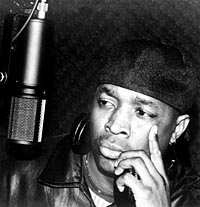
When young Carlton Ridenhour first heard "Rapper's Delight" he knew that was for him. He took up the name Chuck D. and joined up with Spectrum City, run by Hank "Shocklee" Boxley (the Afrika Bambaataa of Long Island.) People first really noticed Chuck D's promise with "Check Out the Radio," a b-side to "Lies" a Spectrum City single.

Bill Stephney, also a Long Island resident, spotted Chuck D. in his Spectrum City jacket on the campus of Adelphi and talked him and Hank into doing a Saturday night rap show, called the "Super spectrum Mix Hour." Stephney was hired on at DefJam as their first full-time staffer, with a vision of taking rap full-on to the suburbs. He then proceeded to push his radio friends to play Run DMC's cover of "Walk This Way," when all research showed it wouldn't play. By the end of '86 he'd done an end-around: Run DMC had crossed over to white audiences, and The Beastie Boys had crossed over to black audiences. Stephney also believed their was a place for a rap group that was equal parts Run DMC and The Clash... he wanted a rap Sandanista! Meanwhile, Rubin was pestering Chuck until Stephney got him to finally came in for a meeting and based on a demo was signed to DefJam. Chuck didn't want to go it alone, so he negotiated Hank and DJ MC Flavor into the deal. Richard Griffin provided the security for Spectrum City and in the new model, became Profressor Griff and his security team renamed the Security of the First World (S1W's.) Hank assembled the musical team with Spectrum City DJ Norman Rogers, who became "Terminator X." He and a collection of a few others became known as the Bomb Squad. They then changed their name to Public Enemy, reborn with a political slant, influenced by artists like Gil Scott-Heron, The Last Poets and H. Rap Brown; the speeches of Louis Farrakhan and Jesse Jackson; and recent events like the Howard Beach incident, vigilante Bernhard Goetz and the fatal police beating of graffiti artist Michael Stewart.

Their first album, Yo! Bum Rush the Show (1987,) found Chuck D frustrated that white critics didn't vibe with his pro-Black stance while Black radio remained indifferent to their music and message. A series of interviews Chuck D. lambasted both White and Black Amercia. As Chuck D. put it, "our interviews were better than most people's shows." The record wasn't even close to sales of label mates Run DMC, The Beastie Boys and LL Cool J. New school acts like MC Shan, Biz Markie, De La Soul and EPMD were sprouting up and doing well, making it look like PE might not be able to compete. One act in particular, though, hit PE the hardest...

It was another act from Queens that took PE by surprise. Founded by DJ Eric Barrier (Eric B.) and rapper William Griffin (Rakim,) Eric B. and Rakim debuted their album Paid In Full, and it was a critical masterpiece. Still considered today as one the greatest rap albums ever recorded, Paid in Full explored both the braggodocio of the day, but also a self-consciousness that rap hadn't seen before. As writer Greg Tate wrote, "Chuck D's forte is the overview, Rakim's is the innerview." When "I Know You Got Soul" was dropped, Chuck and Hank heard it and knew where they had to go.

"I got soul too," rapped Chuck D. on "Rebel Without a Pause," both recognizing Rakim's rhyme and signaling it out. He and PE had just raised the bar, and "Rebel" heated up the clubs like a boiling kettle squeal, with fights even breaking out in response to it's riot call. Within two months of it's release, It Takes a Nation of Millions to Hold Us Back had sold two-million copies and had probably set off just as many debates. One of those debates was over whether rappers should be held to revolutionary standards as leaders, which was a sign of the troubled state of post-Civil Rights leadership.

One individual that found himself in the same boat as PE, was Spike Lee. His film, Do the Right Thing (1989,) sparked a lot of controversey with it's racial battle in Bed-Stuy between Radio Raheem, Korean grocers, and an Italian pizzaria. At the heart of the battle was a song from Public Enemy - "Fight the Power." The video for the song, directed by Lee, was in the style of a Black power march, starting with footage from 1963's March on Washington, then flashing forward with Chuck D saying "1989! The number, another summer." One lyric in the song had Chuck D. ready for controversey ("Fu*k him [Elvis] and John Wayne,") but a series of Professor Griff interviews that were sprinkled with anti-semitic remarks had Chuck D. on a different defense. It was a PR fire that burned out of control and initially led to Griff's removal from spokesperson duties, and then finally from Public Enemy entirely, complete with apology from Chuck D. "Welcome to the Terrordome" had D rapping "Crucifixion ain't no fiction, so-called chosen frozen, apologies made to whoever please, still they got me like Jesus" which had many calling it anti-semetic as well, even w/o Griff in the mix.

South Central Los Angeles had a similar situation to South Bronx, both socially and economically. In the 1920s, as the Black population of LA was growing, the neighborhood Watts became predominantly Black, so to avoid having a black mayor, LA quickly annexed Watts. When WWII happened, migrants moved into the neighborhood in droves and Watts was busting at the seems and strapped for services to handle the strain, and one of the results was the first race riots (Zoot Suit riots) in 1943. The conditions continued to get worse, and by late summer in 1965, it overflowed into the Watts riots, where Watts found their gangs dropping their rivalries and fighting together against the police. When the Black Panthers were brought down in 1969, Raymond Washington filled the void and created the Baby Avenues, which eventually became the "Crips." In 1973, when beefs between gangs turned bloody, several of Crips rivals merged to form one conglomeration called the Bloods. During the Reagan years, Firestone, Goodyear and GM all closed their manufacturing plants in South Central. 131 plants in all, affecting 124,000 people unemployed and by 1983 South Central's unemployment rate was at least 50% for youths, and the poverty level there was up over 30%. In 1988, Police Chief Daryl Gates started Operation Hammer, his war on gangs, where they'd demolish apartment buildings based on rumors, leaving hordes of innocent people homeless. It was these circumstances that weighed heavily on the music scene in L.A.
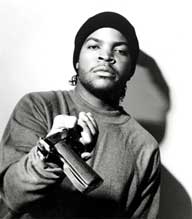
In Compton (South Central LA,) young O'Shea Jackson had been rapping in a group called C.I.A. (Criminals in Action) under the name Ice Cube, dropping sex rhymes to shocked and delighted crowds. Eric Wright, a 23-year old drug dealer, saw hip-hop growing in South Central and saw a way to get cash legit. He got Andre "Dr. Dre" Young, Antoine "Dj Yella" and Jackson together for a collaboration. One night, in 1987, Young and Wright were in the studio with an East Coast group (HBO) that Dre had found, thinking that NY-style would go over well in South Central. Ice Cube had written some lyrics for one song, and HBO refused to do it and walked out, so Wright stepped in, took the name Eazy E and they recorded "Boyz-N-The Hood." It was released as a single for Eazy E, and it became the stuff of legends. Emboldened they finished an album under Easy E's name and then put the all-star rap group together E called it Niggaz With Attitude (N.W.A.,) an intense image that they tried to uphold.

Straight Outta Compton was released in 1989 and went gold in six weeks (it eventually went double platinum.) Radio wouldn't touch it, Priority records didn't promote it, and MTV banned their video for the title track, but it sold anyway, which signaled a change in how albums reached the public. It put both West Coast Hip-Hop and Gansta Rap on the map. The song "Fu*k da Police" earned a letter from the FBI, and the ire of law enforcement wherever they played. Boycotts were formed at every level, but it still broke through, and found it's way into the white suburbs, which began a sort war on youth culture. Coupled with the war on gangs, crime legislation went overboard with three strikes out, mandatory sentences, prison expansion, and more cops.

Ice Cube, inspired by Public Enemy releases, took off to the East Coast to work on his solo album, and enlisted the help of the Bomb Squad (who had just wrapped up PE's Fear of a Black Planet, 1990) for the recording. Cube took his black teen rebellion and infused it with Chuck and the S1W's Black nationalism for his Amerikkka's Most Wanted (1990) album. His raps still talked about living in the ghetto, but instead of glorifying it now the raps were meant to condemn society for letting ghetto despair occur. Excited about his solo career, Cube went back to work immediately on a follow-up.

Death Certificate (1991,) which made platinum before it was even released (advance sales,) and was even harder and angrier than his debut, and it immediately struck both positive and negative chords in society. Boycotts appeared immediately from the Simon Wiesenthal Center (for the song "No Vaseline") and from the Korean American Coalition. The KAC's beef was with the song "Black Korea," which came at a bad time for the Korean-Black relations, after a Korean storekeeper shot and killed a black woman trying to buy some Orange Juice. The Korean American Grocer's Association (KAGRO) joined in and hit Cube where it hurt - his endorsement deal with St. Ides. KAGRO demanded that they drop Cube and when they didn't, they stopped St. Ides from being sold in over 5,000 stores across the country. Ice Cube stepped in and tried to make amends w/ an apology in February of 1992, and both the ban and the boycott were lifted. Relations seemed better, but a little more then a month later, it all went to hell.

Next: Loop 4 - Stakes is High 1992-2001

Previously:
Loop 1 Babylon is Burning 1968-1977
Loop 2 Planet Rock 1975-1986

More: Jeff Chang's blog

Novel Soundtracks is intended as a soundtrack for a novel/book that is being read and can also serve on it's own as a music playlist. Songs referenced in the book are put into a playlist.

Previous Novel Soundtracks:
Novel Soundtrack: Kafka On The Shore (Murukami)
Novel Soundtracks: Killing Yourself To Live (Klosterman)
Novel Soundtracks: Drive Like Hell (Hudgens)
Novel Soundtracks: Fortress of Solitude (Lethem)
James Frey's My Friend Leonard
Jonathon Lethem's The Disappointment Artist

tags: , , , , , , ,

Thursday, August 11, 2005

History of Hip-Hop: Planet Rock 1975-1986

Novel Soundtracks: Can't Stop Won't Stop - A History of the Hip-Hop Generation Broken into 4 parts (Loops)

Playlist: Loop 2 Planet Rock 1975-1986
Bam used to say, 'Hey, they throwing a block party in Bronxdale,' and he has his box and bagful of tapes with all the music... and when he starts walking to Bronxdale, he'd have like forty people walking behind him."
—Jayson "Jazzy Jay" Byas on Afrika Bambaata
Part 2 of Jeff Chang's excellent book Can't Stop, Won't Stop: History of the Hip Hop Generation, which explores the intellectual roots, political movements, and society's ills in the formation of a full-fledged culture that is hip-hop. (Click here for Loop 1.)

When you talk about the godfathers of hip-hop, three are usually named - Kool DJ Herc, Grandmaster Flash, and the enigmatic Afrika Bambaata, or Bambaataa Kahim Aasim. Bambaata was born (in 1957, probably - he won't talk about his age) in Manhattan and came of age during the late 60's, right in the middle of the struggle - integration or separation. James Brown's beat was of black power , while Sly & the Family Stone was a dance of integration, and both crossed-over to both sides, which appealed to Bambaata. He joined a gang around age 12 and soon found himself crossing gang lines and forming alliances. Later, as the gangs were receding, the Black Spades warlord could see the future, and it meant crossing not just gang but also musical borders to bring people together. He founded Universal Zulu Nation, the first hip-hop institution, raising consciousness of the four elements - Djing, MCing, b-boying and Graffiti writing (he later added a fifth column - knowledge.) He pulled together mashes as disparate as Kraftwerk and The Rolling Stones for the parties he DJ'd, and folks crossed gang lines for these events.

Kool DJ Herc was first with his the powerful sound system, and Baambaata followed, changing the game with his knack for programming... both of them were giants and had a crew to back them. Young Joseph Saddler had none of this... but what he did have was his style. Saddler, who would become Grandmaster Flash, took notes and experimented with two turntables in his room. He took Herc and DJ Jones' merry-go-round concept and turned it around, cutting one break into another. It fell on deaf ears initially, but he developed a crew that would vocalize over the top. "Cowboy" Wiggins commanded the crowd to "Say ho!" and "Throw your hands in the air and wave 'em like you just don't care!" The Glover brothers, Melvin "Melle Mel " and Nathaniel "Kidd Creole," joined in as well, devising more intricate lines, inspired by the Last Poets and others. Grandmaster Flash and the Three MC's eventually grew to the Furious 5, and by 1977, every DJ that didn't rap scrambled to line up crews as raw as the Furious.

By 1979, however, the scene was dying... the kids had grown up and moved on to nightclubs, and DJ's there were adapting the Bronx rap and mix styles into their gigs, and the bottom seemed to fall out of the scene. Several record producers heard about the rap and fished for someone to sign, and Flash and the 5 were at the top of everyone's list - but Flash didn't really see the point. Black indie label owner Sylvia Robinson and her son Joey decided to record a track with three unknowns, Henry "Big Bank Hank " Jackson Guy "Master Gee" O'Briend and Michael "Wonder Mike" Wright. The song they recorded was Rapper's Delight" and they released in on their Sugar Hill Records label, under the moniker The Sugar Hill Gang. It used rhymes Big Bank Hank learned from managing Grandmaster Caz over Chic's "Good Times," and was an instant sensation. On one side, listeners were amazed to hear a 15-minute long song on the radio, while most MC's at the time couldn't understand how you could put hip-hop onto a record... how did they boil 3 hours down to 15 minutes? It became the best-selling twelve-inch ever pressed.

Overnight the world changed... suddenly Kurtis Blow (managed by a young Russell Simmons) was signed to a major label and released "Christmas Rappin'" and "The Breaks" on Mercury. Bamabaata jumped in the fray, and Flash decided to return Sugar Hill Gang's calls and released "Superappin'" a month after "Rapper's Delight" (thinking it would increase their bookings.)

Both hip-hop and punk were born of similar economic circumstances, only having race as a separation. Hip-hop crossed racial lines across the Atlantic immediately, with The Clash recording two songs with rap ("The Magnificent Seven" and "This is Radio Clash") for their album Sandanista! (1980.) When they played in New York in January of 1981, they added Grandmaster Flash and the Furuious Five as an opener. The crew was abused by the punk crowd and left after the second night. The Clash criticized their fans and learned a lesson about racism in America. Other white proto-punkers incorporating hip-hop into their sound were Malcom McLaren (manager of the New York Dolls and Sex Pistols) with "Buffalo Gals"; Tom Tom Club (Talking Heads vets Chris Frantz and Tina Weymouth) with "Genius of Love"; and especially Blondie with their hit "Rapture," that had Debbie Harry rapping callouts to graffitti artist FAB 5 FREDDY, rapper Grandmaster Flash and... eh... something in French:
FAB 5 FREDDY told me everybody's fly, DJ's spinning I said, 'My, my!' Flash is fast, flash is cool. Francois c'est pas flashe non deux
In April of 1982, Bambaata released a single that had as much impact as "Rappers' Delight" in "Planet Rock," opening the world of rap for everybody. Sampling Kraftwerk's "Trans-Europe Express," it had a feel that wasn't limited to the Bronx experience: "No work or play, our world is free. Be what you be, just be!" Meanwhile, over at Sugar Hill Records, controversy was brewing. House band percussionist and songwriter Ed "Duke Bootee" Fletcher put together a song called "The Message" that wasn't all fun and styling, and Flash and the crew refused to rap on it. But Sylvia Robinson and Bootee recorded it anyway, getting Melle Mel to add a verse from an unused version of "Superrappin'." After the rap was laid, they knew it was the next single. It became their biggest hit, and raised tensions in the group until Flash left Sugar Hill (within a year,) and for awhile there was two groups calling themselves Furious Five while a court decided who had rights to the name.

A documentary made during this time (the excellent Wild Style, now out on DVD) that created a stir, showing the graffiti artists and b-boys of the Bronx and their brief rise to the art gallerys of New York. B-boys the Rock Steady Crew also made a stir in Flashdance, setting the stage for the scene to be fully exploited. Breakin', Beat Streat were first out of the box, followed by Body Rock, Fast Forward, Krush Groove, Delivery Boys, Turk 182, Rappin', and even Breakin' 2: Electric Boogaloo. It was too many movies, all rushed too quickly, and the scene was quickly squelched.

Hip-hop's center was now slowly shifting away from New York's uptown. By 1984, the biggest rap group was from the Queens: Run DMC. Managed by Russell Simmons, Run DMC were a reaction to old school - they used big booming drum machines and echoing raps instead of the disco rhythms that fueled rap before. Their first single, "It's Like That/"Sucker MCs" was released on Profile and sold well. Simmons teamed up with a Jewish NYU student named Rick Rubin and they formed their own label Def Jam to put out their albums, along with another Queens rapper, teen LL Cool J and white ex-punkers The Beastie Boys.

About this time, drugs began to deteriorate the uptown scene. CIA-sponsored anti-communist groups were funded by heroin (Southeast Asia) and cocaine (Cuba, Contras in South America) profits and by the 80's the drugs became affordable through volume and the innovation of one "Freeway Rick" Ross, who created "Ready Rock" or crack cocaine. Black and poor neighborhoods in large cities like NY, Philly and LA were the targets, and soon a new environment developed for hip-hop to be created in. Schoolly D, from North Philly, began rapping about beating down 'style-biters' and screwing cheap whores. Meanwhile, LA rap pioneer Tracey "Ice T" Marrow heard Schoolly D's song "P.S.K." and borrowed some of his style to rap from the perspective a teenage Crip on a b-side ("6 N the Morning") that created quite a stir in L.A. By the time Run DMC's tour (with Whodini opening) made it to SoCal, LA's gangs turned the concert into their own battlefield. Hip-hop was now becoming a voice of rebellion.

Next: Loop 3 The Message 1984-1992

Previously: Loop 1 Babylon is Burning 1968-1977

More: Jeff Chang's blog

Novel Soundtracks is intended as a soundtrack for a novel/book that is being read and can also serve on it's own as a music playlist. Songs referenced in the book are put into a playlist.

Previous Novel Soundtracks:
Novel Soundtrack: Kafka On The Shore (Murukami)
Novel Soundtracks: Killing Yourself To Live (Klosterman)
Novel Soundtracks: Drive Like Hell (Hudgens)
Novel Soundtracks: Fortress of Solitude (Lethem)
James Frey's My Friend Leonard
Jonathon Lethem's The Disappointment Artist

tags: , , , , , ,

Friday, August 05, 2005

History of Hip-Hop: Babylon is Burning 1968-1977

Novel Soundtracks: Can't Stop Won't Stop - A History of the Hip-Hop Generation Broken into 4 parts (Loops)

Playlist: Loop 1 Babylon is Burning 1968-1977
Hip-hop is the voice of this generation. Even if you didn't grow up in the Bronx in the '70s, hip-hop is there for you. It has become a powerful force. Hip-hop binds all of these people, all of these nationalities, all over the world together.
—DJ Kool Herc, from the Introduction
Jeff Chang's comprehensive look at hip-hop is quite a read. It explores the intellectual roots, political movements, and society's ills in the formation of a full-fledged culture that is hip-hop. It's born, like steel and glass, in fire. Both the Bronx (NY, USA) and Trenchtown (Kingston, Jamaica) were ablaze with fires and saw music born of it's ashes. The following is just a 'cliff notes' of the musical-related aspects of the book - I recommend it highly for an in-depth look.

Jamaica had a national identity crisis following it's independence from Great Britain. From this rose Reggae, which as often is said, is rap music's elder kin. Leaders like Marcus Garvey and Ethiopia's Haile Selassie (pictured left) brought a rise in the black identity of youth (especially in the impoverished western Kingston ghettos - Back-O-Wall being the most prominent,) which became known as the Rastafari movement. These Rastafarians learned Burru drumming, an African art durvived from the days of slavery. Burru centered on the interplay of three drums, bass, alto and the repeater. In Jamaica, the repeater was mimiced by the 'DJ' which was their term for 'rapper.' In 1966, Back-O-Wall was demolished by the Jamaican Labour Party, ending in a blazing fire. A housing project named Tivoli Gardens was put in it's place and populated with JLP-friendly residents. "Two Sevens Clash," by Culture, sings of this divide.

In 1972, Perry Henzell's movie The Harder They Come (starring Reggae singer Jimmy Cliff) came out based on a real-life fifties Kingston outlaw. Both the movie's music and story helped frame Jamaica in the 1970's. The record label Island Records financed the movie, and head Chris Blackwell was so inspired by it's success, that he signed a struggling reggae band called the Wailers and tried to cross them over to a wider mainstream audience. For their Island debut (Catch a Fire, 1973) they brought in Muscle Schoals session guitarist Wayne Perkins and keyboardist Rabbit Dundrick to overdub tracks ("Concrete Jungle".)

About this time, a small backyard studio in Kingston called the Black Ark was cranking out imaginative sounding releases, and it's eccentric owner was Lee "Scratch" Perry. Perry used his analog machines to turn sounds over and back into themselves creating fragmented loops. Dub had already existed by this point, created by accident, legend has it, by Ruddy Redwood. Songs were often recorded on to exclusive acetates called 'dubplates' and one time an engineer forgot to pan up the vocals on the Paragons' hit "On the Beach" and Redwood used the uncorrected acetate to a dance that night and mixed between the vocal and the dub, sending the crowd wild. They began to use these 'vocal-less riddims' as b-sides, which was cheaper then recording another song, and they could be used by DJ's to rock patwa rhymes over. Thus 'dub' is born by accident, and a clear foreshadow of rap's riddims to come.

Dub became a force of political lyricism and African idealism, with Lee "Scratch" Perry at the helm for much of it. Artists making time in the dub scene were Max Romeo, Keith Hudson, Niney the Observer, Joe Biggs, Philip Smart, Harry Mundie, and the most influential dubmaster, King Tubby. During this time, politics and economic difficulties burdened Jamaica, and there was even an attempt on the life of Bob Marley, so he'd gone into exile. In 1977, he was brought back to headline a "One Love Peace Concert," uniting the warring sides under a peace treaty. That wouldn't last, however, and the Reagan-courted JLP helped spring a new wave of violence in 1980, with nearly 900 dying in election-year violence. In 1979, the Marley camp was being tailed by CIA operatives and Marely himself was diagnosed with cancer. By 1981, he was dead. In 1978, Perry's Black Ark (which had become a center for Boboshanti by that time) began to be dismantled. Perry shaved his dreads and sent away the Rasta groups. In 1983, Perry burned the studio to the ground.

The South Bronx was also ablaze, as slum lords repeatedly burned their properties for insurance when maintenance was needed - between 1973 and 1977, 30,000 fires were set in the South Bronx. How did this happen? The Cross-Bronx Expressway displaced 60,000 people, forcing them into housing projects in the south Bronx. White picket fences of the suburbs drew the white families while the working class poor got isolated concrete slab housing that became riddled with crime. The South Bronx was full of white (Jewish, Irish, Italian) youth gangs that preyed upon the new occupants, making them form their own gangs. These gangs were set up originally to protect their neighborhood: The Young Lords, Savage Skulls, and Savage Nomads. Soon though, they began fighting eachother. More gangs joined in, the Black Spades, the Bachelors, the Roman Kings, the Mongols... and the Ghetto Brothers, who tried to act as peacemakers (and musicians.) After a truce was reached, the Ghetto Bros. played Friday night block parties, which the kids loved to dress up and dance at - instead of gang'ing.

DJ Kool Herc (Clive Campbell) came from Jamaica in 1967 with his family and started DJing house parties before moving up to taking on these outdoor block parties. By 1974, Herc started noticing the kids waiting on certain drum breaks (ex. "Get On The Good Foot " by James Brown live on Sex Machine & "Fencewalk" by Mandrillto) to make their moves, and he zeroed in on what was becoming the heart of the song - the break. He began looping two of the same album together in a technique he called the merry-go-round - extending a five-secon break into a much more danceable length of sequence of loops. The dancers got a name from Herc too, he called them break boys, or b-boys for short. By 1977 competitors lined up for Herc's crown, with a grid setup not unlike the gangs in prior years - Grandmaster Flash had a grid as did former Black Spade Afrika Bambaataa (with his Zulu Nation.)

Next: Loop 2 Planet Rock 1975-1986
Loop 3 The Message 1984-1992

More: Jeff Chang's blog

Novel Soundtracks is intended as a soundtrack for a novel/book that is being read and can also serve on it's own as a music playlist. Songs referenced in the book are put into a playlist.

Previously:
Novel Soundtrack: Kafka On The Shore (Murukami)
Novel Soundtracks: Killing Yourself To Live (Klosterman)
Novel Soundtracks: Drive Like Hell (Hudgens)
Novel Soundtracks: Fortress of Solitude (Lethem)
Jonathon Lethem's The Disappointment Artist

tags: , , , , , ,