Showing posts sorted by relevance for query novel soundtrack. Sort by date Show all posts

Tuesday, August 04, 2009

Now Downloading: New Releases 08.04.09

While the past few weeks have been hot, the releases have been all smoke but no fire. This week, there's plenty of flames between the full length debut from Vancouver, BC's Japandroids finally getting released on this side of the border and new releases from Fruit Bats, Modest Mouse, YACHT, Throw Me the Statue and Joe Pernice releasing a Novel Soundtrack (perhaps I should've trademarked the name!). Also, two releases from frontmen going solo in disguise (sort of). My Morning Jacket's Jim James releases an EP under the name Yim Yames while Interpol's Paul Banks releases a full length under the moniker Julian Plenti.

Playlist: New Releases 08.04.09


Japandroids - Post-Nothing
Stream / Purchase [mp3]

Japandroids - Post-NothingFinally, the throwback guitar and drums duo from Vancouver sees their full length debut released in the states after buildig plenty of 'next big thing' buzz upon it's release North of the border. Japandroids trade in the kind of teen angst that I can still get behind, and perhaps that's because they rely on late 80's (Husker Du) and early-to-mid 90's (Superchunk) crunchy guitar pop sounds. It's tempting to lump them into the lo-fi No Age/Wavves noise rock movement, but there's a lot more epic pop at it's base. And while the youthful exuberance, especially demonstrated at their recent Capitol Hill Block party gig, might seem distant to an aging (yes, aging!) rocker like myself, but Brian King & David Prowse aren't just young, dumb and full of cum. Witness the album's highlight "Young Hearts Spark Fire," with the lyric 'We used to dream/ Now we worry about dying/ I don't want to worry about dying, I just want to worry about those sunshine girls.' That's some forward thinking from lads who are barely into their twenties. The other highlight, "Sovereignty", tells of distance from one's home, a mature theme, but sprinkled with enough timely f-words to illustrate the youth/experience juxtaposition that Post-Nothing has in spades.

Free AOL Album Stream
Download: "Young Hearts Spark Fire" [mp3]
Video from Capitol Hill Block Party


Fruit Bats - The Ruminant Band
Stream / Purchase [mp3]

Fruit Bats - The Ruminant BandSub Pop may have lost The Shins, but Fruit Bats' latest, while guaranteed not to sell nearly as much, makes for a nice consolation prize. The band had plenty in common with the former S/P big sellers even before singer/songwriter/guitarist Eric Johnson became a member of The Shins. The Ruminant Band is the fourth (third w/ Sub Pop) album that Johnson & co. have been delivered, and it's a continuation of what I could only call 'elegant pop,' this time helped out by Califone's Tim Rutili and Jim Becker. There's nothing exhilarating about a FB release, but you don't always need that. Just some fine song craftsmanship and execution for another solid Fruit Bats release.
Highlights: the title track and the twang-y "Hobo Girl."

Free AOL Album Stream
Download: "The Ruminant Band" [mp3]
Download: "My Unusual Friend" [mp3]


Joe Pernice - It Feels So Good When I Stop
Stream / Purchase [mp3]

Joe Pernice - It Feels So Good When I Stop (Novel Soundtrack)Of course I'd be remiss if I didn't address this execution of a former staple of this site, the Novel Soundtrack*. Joe Pernice (Pernice Brothers, Scud Mountain Boys) has always seemed like a novelist dabbling in pop music, and now the tables are turned. His first novel, It Feels So Good When I Stop, is released this week, and so is this album, meant as companion. Instead of just compiling the songs mentioned in the novel, Pernice puts his on spin on several of them, ranging from Del Shannon's "I Go to Pieces" to Todd Rundgren's "Hello, It's Me". Also sprinkled in is Pernice reading passages from the book. As you might already guess, the album doesn't work as well without the novel, but that's not its purpose. But Pernice fans who buy it are sure to want to pick up the novel, and vice-versa, I'm sure, and that's something, right?

*thus spake drake used to be the number one search result, but my NS posts have been few and far between of late.


More on the radar (and in the mp3 player) this week:
Modest Mouse - No One's First, and You're Next EP / Free AOL Album Stream
YACHT - See Mystery Lights / HD Video for "Pyschic City"
Julian Plenti - Julian Plenti Is...Skyscraper / "The Fun That We Have" [mp3]
Yim Yames - Tribute To EP / Free AOL Album Stream
Throw Me The Statue - Creaturesque / Free AOL Album Stream / "Ancestors" [mp3] / "Hi-fi Goon" [mp3]
Sian Alice Group - Troubled, Shaken etc.
Plastiscines - About Love
Nurses - Apple's Acre / Free AOL Album Stream / "Caterpillar Playground" [mp3]
Greymachine - Disconnected
The Duke And The King - Nothing Gold Can Stay / Free AOL Album Stream
Medeski, Martin and Wood - Radiolarians III / Free AOL Album Stream / "Amber Gris" [mp3]
Watermelon Slip - Escape From The Chicken Coop
Soul-Junk - 1096
Brian Bonz & The Dot Hongs - From Sumi to Japan / Free AOL Album Stream
Amanda Blank - I Love You / Free AOL Album Stream
Helado Negro - Awe Owe (AOL Album Stream) / "Deja" [mp3]
Holiday Shores - Columbus'd The Whim (AOL Album Stream)

tags: , , , , , , ,

Friday, August 18, 2006

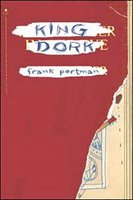
Novel Sndtrck: King Dork

Play it: Novel Sndtrck - King Dork
Play it: Dr. Frank & the Mr T. Experience

When I first started reading Frank Portman's (Dr. Frank of Mr. T & the Experience) King Dork, I was reluctant to get into it. It felt like many coming of age novels I'd read before and really was close to moving on to another book. But then something happened.... it was like I slipped and started sliding down a hillside and next thing you know, the Drake was fully absorbed - literally. unable. to. put. it. down.

It happened once the mystery started to set in. Then all the jocular music and high school geek comedy became even funnier, and the 'will the geek get the girl in the end?' plotline doesn't nearly as trite as it might be. Essentially at it's heart, it's both a love story and a mystery... with Freaks & Geeks and Dazed & Confused as a setting. King Dork is the perfect book to be Novel Sndtrck'd, as it's chock full of musical references, with 70s vinyl spinning nearly throughout the book. Got some thinking to do? Turn on the TV to some b-movie, turn down the volume, and put on some Blue Oyster Cult, or Brian Eno, or even The Stranglers. Forget playing Dark Side of the Moon to The Wizard of Oz, I want to see Evil Dead II with Rattus Norvegicus as the soundtrack.

Throughout the book, our hero Tom Henderson and his next-in-the-alphabet-buddy Sam Hellerman create new bands complete with names, first album titles and monikers. When it's time to kill off an old band, Sam whistles "Sweet Home Alabama," to which they have their own words ("We all died in a plane crash,") and it's time to form a new band. The Underpants Machine then might become Sentient Beard (Mot Nosredneh on Guitar/Vox, Samerica The Beautiful on Bass and Upholstery, first album Off the Charts-Way Off.) Other favorite band names include The Elephants of Style and their final one, We Have Eaten All the Cake. Album titles that I'd be tempted to pillage include Pentagrampa and, my favorite, Margaret? It's God. Please Shut Up.

There's plenty of music references throughout the book, including a couple fine digs on Led Zeppelin. From the hilarious glossary:
hey, gang! Let's all get stoned and head down to the Mississippi Delta and watch four goofy-ass English guys in wizards' hats and girls' blouses play "the blues" and teach us everything there is to know about elfin princesses; gossamer wings; the tooth fairy; the land of Winken, Blinken, and Nod; the wise dark and mystic pilgrim brooding in the mist; and Puff the Magic Dragon.
Come on, it'll be magical.
While there is also criticism of The Catcher in the Rye cult, don't be fooled into thinking that's what the book is about. There's a lot more (and a lot less) going on then that... reminds me a bit of a funnier The Dangerous Lives of Altar Boys. While no one will confuse it with a a critical masterpiece, it seemingly does what it set out to do - both entertain and rock you.

More:
The trailer for King Dork (YouTube - features The Stooges' "TV Eye")
King Dork's reading list
King Dork's discography

Previously:
Novel Sndtrck - On Beauty
Novel Sndtrck: Anansi Boys
Novel Sndtrck: Lunar Park
Novel Sndtrck: The Hot Kid
Novel Sndtrck: Glass Soup
Novel Sndtrck: White Apples
Novel Sndtrck: Kafka On The Shore (Ribaldry and Schmaltz's J Shifty)
Novel Sndtrck: Killing Yourself To Live (Drive Like Hell's Dallas Hudgens)
Novel Sndtrck: Drive Like Hell
Novel Sndtrck: Fortress of Solitude
James Frey's My Friend Leonard
Jonathon Lethem's The Disappointment Artist

tags: , , , , , , ,

Friday, January 20, 2006

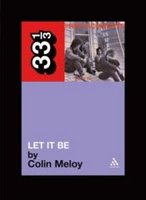
Novel Sndtrck: Let it Be (33 1/3 )

Play it: Novel Sndtrck: Let it Be (33 1/3)

Colin Meloy, of The Decemberists, grew up in Helena, Montana, rural and in the middle of nowhere to most folks. The Replacements' brand of trash punk was a ultimately was a fight against a Midwestern environment not wholly conducive or accepting initially to such a sound. That's what makes The Replacements so appealing to folks that grow up in 'middle of nowhere' areas, like Meloy (and myself for that matter... thus spake drake salutes my hometown Cashmere, Washington... population 2,982 - "Saaaluuute!"*)

Meloy's offering in the appealing 33 1/3 series** takes on the classic Mats album Let it Be, and also chronicles Meloy's musical maturity, battling his rural surroundings to find his music, during the advent of MTV, it's late Sunday program 120 Minutes, and 'college music.' It's an endearing 'coming of age' story, and Meloy doesn't flinch from letting you see the geek and uncool (Dungeons & Dragons, Men at Work, a Nylons concert,) which is more of a true memory. I find myself reinventing my past sometimes, when in fact, outside of early Prince (Dirty Mind) and Bootsy Collins (Player of the Year, both by happy accident) my tastes ran mostly MOR (w/ range.) Where AC/DC meets Billy Joel, and Olivia Newton John's Physical (on 8-Track, no less) reveals more about physical maturity (listening with my newly discovered groin) then actual musical maturity. As usual, with rural kids, there's an older influence, in this case an older Uncle (Paul) who's just out of college - the perfect age to feed a starving young ear what he needs to hear. Through mix-tapes, Meloy enters a world inhabited by Camper Van Beethoven, Robyn Hitchcock, Guadacanal Diary, R.E.M. and, of course, The Replacements. College music, they're calling it, and it's a revelation that creates a unquentiable thirst for Meloy, that's filled with Depeche Mode, The Smiths and the Jesus & Mary Chain as well as Uncle Paul's suggestions. The playlist, as a result, is a telling chronicle of Colin's growing musically, warts and all. Chicago's Peter Cetera butts up against The Replacements, while an unintentional insight is gathered from having The Replacements' "Androgynous" followed by Poison's "Every Rose Has it's Thorn."

*A little Hee-Haw reference for those that care.

**The series takes artists and has them write about a favorite album, freeform style... could be fiction, could be a memoir, could be a biography... just what the album inspires.

P.S. I know what you're saying, two Novel Sndtrcks in one week? Just don't get used to it, k?

Previously:
Novel Sndtrck: White Apples
Novel Soundtrack: Kafka On The Shore (Ribaldry and Schmaltz's J Shifty)
Novel Soundtracks: Killing Yourself To Live (Drive Like Hell's Dallas Hudgens)
Novel Soundtracks: Drive Like Hell
Novel Soundtracks: Fortress of Solitude
James Frey's My Friend Leonard
Jonathon Lethem's The Disappointment Artist

tags: , , , , , ,

Thursday, May 04, 2006

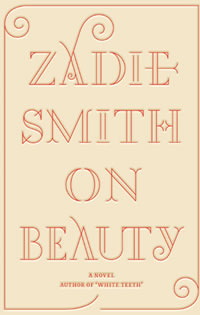
Justifying the means to Howard's End

Play it: Novel Sndtrck - On Beauty

Zadie Smith's third novel, On Beauty, finds the author taking a more straight-ahead approach in comparison to her previous novels (the dynamic and lyrical White Teeth, and the experimental Autograph Man.) Based on the framework of E.M. Forster's Howard's End, On Beauty follows two ideologically different families: the liberal/multicultural Belsey family, and the right-wing ultra-conservative Trinidad/Haitian Kipps family. Through their trials and tragedies (all with written with a comic's touch,) Smith brings to light a couple different issues for debate, one of which is the sociological ramifications to race restitution (which deserves it's own post in and of itself.) The other debate is on critical thought, specifically on art.

True criticism, believes the main character Howard Belsey, is not an appreciation but more a question of why people like it, and an explanation of why they shouldn't like it. Howard is a professor who cannot say "I like the tomato" but instead needs to examine it with "What's so beautiful about this tomato? Who decided on its worth?" His criticism of the paintings of Rembrandt is central to both the plot and to the difference between him and fellow professor Montague Kipps. Another major character Carl is a street poet/rapper who is given the opportunity to work in the university library as a "Hip-Hop Archivist" and finds that after collecting and writing about Hip-Hop, he's no longer so much interested in creating it.

It's a common problem that I think a lot of people fall into... looking at things critically can make you like art less, and more importantly, actually engage in the art even less (if at all.) I find this the case in my own world... both periods of my life where I've spent time writing critically about music (and fiction) I find myself being less interested in playing music (or writing fiction.) Every once in awhile though, a piece of music inspires to do, not just listen (or write about) and that's what really gets me 'back in the basement' (so to speak.) My recent surgery on my wrist was finally prompted after this last inspirational attempt proved futile (thumb/wrist pain made it impossible to even form a power chord.) It's a drastic measure to get back to playing but not as drastic as you might think. Howard in the end (Howard's End?) has some resolution to his issue (he's finally able to metaphorically say he likes the tomato) after having an affair that rattles the family - that's certainly a road I'm less willing to take (and not just because my sweetie pie reads this blog.)

Musically, the novel's soundtrack falls into a lot of what you might expect from what I've written above. Hip-hop, classical, and I've even thrown in (on my own accord) something from Wyclef Jean's important Welcome To Haiti Creole 101, which encapsulates much of the Hatian immigrant issues that have a minor play in the novel.

tags: , , , , , , ,

Monday, January 16, 2006

Novel Sndtrck: White Apples

Play it: Novel Sndtrck: White Apples

Someone recently recommended Jonathan Carroll's latest novel Glass Soup, and since it's a continuation from this prior novel, White Apples (2002,) I thought I'd tackle that one first - and found it ripe for the Novel Sndtrck workout. I also, quite surprisingly, have seemingly found that rarest of commodities these days (for me, anyway:) An Author with plenty of books for me discover.

White Apples is a love story in the backdrop of an existentialist view of the big picture. It's main character is dead (not a spoiler) and the story line is of a battle between good and evil, life and chaos. Midway through the book, Carroll reveals his cosmology as one of a mosaic contained of Scrabble-like pieces. Each invidual has his own mosaic, and, against better nature, can't but help to rearrange and change it even when it appears finished. This mosaic, it's then later revealed, is it's own small piece in the larger fabric of the universe, and this mosaic is constantly being destroyed and rebuilt (a 'big-bang',) with a different God each time at it's helm.

At it's heart though, this is a romance... a transcendental romance. Think Adams' Hitchhiker's Guide to the Galaxy written through the lens of Faulkner's As I Lay Dying, with a little of The Omen thrown in for good measure. Pat Conroy has said, "Jonathan Carroll is a cult waiting to be born," and so I don my hood and cape and reach out asking, 'more kool-aid?'

My favorite music (re?)discovery from the book is Major Lance's "The Monkey Time," described in the book as his only hit. While that may be true, most of his songs were written by Curtis Mayfield, and the best of compilation Everybody Loves a Good Time!: The Best of Major Lance (Play it,) is a goldmine of goodtime hits from a lost era of rock n' soul.

An aside - I realize it's been awhile since I last did one of these, and the main reason is Richard Powers' The Time of Our Singing. That's the one I was (and am forever) working on and it's been a doozy. Because of it's girth and levity, I've refocused my Novel Sndtrcks feature to be incidental to my normal readings (instead of seeking out music-specific novels only.)

Previously:
Novel Soundtrack: Kafka On The Shore (Ribaldry and Schmaltz's J Shifty)
Novel Soundtracks: Killing Yourself To Live (Drive Like Hell's Dallas Hudgens)
Novel Soundtracks: Drive Like Hell
Novel Soundtracks: Fortress of Solitude
James Frey's My Friend Leonard
Jonathon Lethem's The Disappointment Artist

tags: , ,

Tuesday, June 14, 2005

Novel Soundtracks: Hudgens' Drive Like Hell

Dallas Hudgens - Drive Like Hell
Novel Soundtracks: Drive Like Hell

Second in the series (see Fortress of Solitude for the first) I've called Novel Soundtracks is Dallas Hudgen's first novel, Drive Like Hell. Billed as a Great American Redneck Novel, Drive Like Hell is a coming of age story that takes place in late-seventies rural Georgia. Funny, sharp, heart-warming, Hudgens' novel is a fine first novel. You noticed I used the word fine, didn't you. Well... as far as first novels go, it's pretty durn good and I'll be on the lookout for more to come from the author, but I'm not going to tell you that it's the kind of book that you absolutely must read. But if the idea of a funny redneck novel and the music in this playlist are interesting, it's a quick and fun read.

Anyway, like most the novels I'm profiling in this series, the music plays an important part in the story, practically character status. From the discussion of Charlie Rich's turn from good ol' country to crossing over, to the Neil Young vs Lynyrd Skynrd southern man mythology, to The Ramones providing a lesson in listening to the drummers tempo w/r/t cunnilingus. Right off the bat you know it's going to be an entertaining ride when our hero, Luke, remembers the first lessons his father (Lyndell) taught him: "If you remember anything," he said, "let it be this. A real man eats pussy and drives a stick shift." Now, don't go thinkin' the whole book is crass and crude, because it's actually quite sentimental, almost to a fault.

Dallas Hudgens has also been doing the blog circuit, creating playlists for folks both related to the book and not. So you get three playlists for the cost of one blog posting. Maybe someday he'll call on this blog for some more playlist fun ;) [--and he did!--]

Largehearted Boy's Book Notes from Hudgens... here Hudgens details songs he thinks the characters listen to and talks about what music inspired him in the writing of his novel - Rhapsody Playlist

Hudgen's loads up The Happy Booker's iPod - Rhapsody Playlist

Previous:
Novel Soundtracks: Fortress of Solitude

tags: , ,

Saturday, March 18, 2006

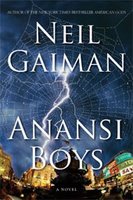
Novel Sndtrck: Anansi Boys

Play it: Novel Sndtrck Anansi Boys

God is dead... meet the kids! In Gaimen's Anansi Boys, Anansi is in reference to the trickster god, who has many tales through African folklore. He's also known as the spider, and when the slave trade brought the West African folklore to the American South, many of his stories found their way into the tales of Uncle Remus involving trickster Brer Rabbit.

Anansi Boys kind of picks up where Neil Gaiman's American Gods left off, as Anansi (Mr. Nancy) was a supporting character in that novel. Of course, when this story begins, he's just died, so we're dealing with his offspring, his son Fat Charlie Nancy. Gaiman intersweaves the rich folklore into a contemporary crime story, and there's a lot of singing as well - for entertainment (karaoke) and as a tool for magic. The song load is heavy on the traditional karaoke fare - you'll notice the first song (sung karaoke by Anansi himself,) is "What's New Pussycat," which if you'll remember, kicked off my swan song tribute to our beloved Leilani Lanes (and their karaoke bar.)

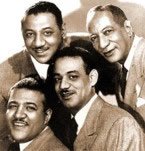
The artist that makes the most appearance in this little soundtrack is The Mills Brothers, and if they ever shot the movie (highly doubtful,) it's the brothers' (John, Herbert, Harry and Donald) smooth depression through WWII era vocals would create the perfect backdrop for such a task. "Yellow Bird" would be the theme song, along with "Tiger Rag."

If you liked American Gods, or are a fan of Gaiman's rich work (The Sandman [comic book,] Mirror Mask [movie,] and Good Omens) then this book is certainly a must-read.

Previously:
Novel Sndtrck: Lunar Park
Novel Sndtrck: The Hot Kid
Novel Sndtrck: Glass Soup
Novel Sndtrck: White Apples
Novel Sndtrck: Kafka On The Shore (Ribaldry and Schmaltz's J Shifty)
Novel Sndtrck: Killing Yourself To Live (Drive Like Hell's Dallas Hudgens)
Novel Sndtrck: Drive Like Hell
Novel Sndtrck: Fortress of Solitude
James Frey's My Friend Leonard
Jonathon Lethem's The Disappointment Artist

tags: , , , , , ,

Friday, March 06, 2009

Who Listens to the Watchmen? Music from the Motion Picture

When director Zack Snyder originally professed his desire to stay as true to the Watchmen graphic novel as possible, in some interviews he also extended it to the music choices as well. The much lauded source material uses a lot of musical cues throughout, so it stands to reason that some would find their way into the film's soundtrack. The first, and most hard hitting of those songs, is Bob Dylan's epic "Desolation Row," a song whose 11-minutes of lyrical poetry might even be more formidable than Zack Snyder's task of bringing Watchmen to the big screen.
Now at midnight all the agents and the superhuman crew
Come out and round up everyone that knows more than they do

"Desolation Row" - Bob Dylan
The song kicks off both the graphic novel and the soundtrack released this week, and how it's handled gives us our first cue as to how Snyder (along with his trusted musical sidekick Tyler Bates) handled the task of making Watchmen accessible to the masses. Snyder and Bates chose to have My Chemical Romance do a sped-up three-minute version of the song to play through the end credits, butchering two birds (Dylan and the source material) with one stone. As to why they went this route, the track record for Snyder and Bates (2004's Dawn of the Dead, 300) show soundtracks that at times are as subtle as a monster truck rally. It's entertaining to be sure, but not something you expect to hear Bob Dylan set to.

There are a few other songs that are true to the original, one of which is Billie Holiday's "You're My Thrill," famously blasted from the Owl Ship (see above panel) as a sort of foreplay for Night Owl and Silk Spectre II as they take part in a spontaneous rescue mission (which also, interestingly enough, acts as a form of foreplay). In the movie version, all this superhero foreplay leads to a Leonard Cohen climax of "Hallelujah", making the song both a cliché and party to what amounts to a cheap joke. Simon & Garfunkel's "Sound of Silence" gets the cliché treatment as well, sombering up a funeral. Meanwhile, the most entertaining portion of the film is the opening montage, which utilizes the Bob Dylan tagline for Ozymandias' Nostalgia Perfume ("The Times They Are a-Changin'"), which shows that you can be true to the source and build upon it.

Playlist: Songs from the Watchmen Graphic Novel
Tracklisting and page/scene references

A separate release for Tyler Bates' score came out this week as well, and sounds influenced by film scores of the time period, most notably the synth sounds of Vangelis (Blade Runner) and the pulsating rhythm of Jan Hammer (Miami Vice). But another strong influence here is the music of Phillip Glass, specifically, his work for the 1982 film Koyaanisqatsi, which is even more apparent by the presence of two of Glass' songs, "Pruit Igoe" and "Prophecies," utilized so well in the film for Dr. Manhattan's backstory. Bates' opening song on the release, "Rescue Mission," borrows heavily from Glass' "Pruit Igoe," abandoning its minimalistic feel for a more muscular and pulsing approach. It's an interesting route to go, but when you see how Glass' original music works in the scene, you kind of wish for more of that, instead of the bludgeoning rhythms (and visuals, for that matter) that bookend the experience.

Previously: Novel Soundtrack: Watchmen

Tuesday, December 30, 2008

Top Soundtracks of 2008

It could be said that 2008 was the year that soundtracks returned as a bankable product, with four soundtracks topping the charts during the year. High School Musical 3, Twilight, Mamma Mia and Juno all may have pulled in some cash, but you won't see any of those on this list (Juno was our #2 in our 2007 list).

This year's crop of films was a bit more gritty than past one's I've curated, and were especially dominated by foreign settings: India, Brazil, Germany, Italy, England, Laos... and of course, Gotham City.

10. Tropic Thunder (Rssmbld Sndtrck Playlist)
This comedy utilized plenty of period music that we all associate with Vietnam war pics, but also brought the booty juice -- sprinkling some hip-hop for Tom Cruise's Les Grossman to shake his thang to. But even beyond that, the score from Theodore Shapiro played around with the action film genre, making it believable while also leaving tongue firmly in cheek. As Kirk Lazerus (Robert Downey, Jr.) said so beautifully about the lyrics to the theme from The Jeffersons, "man, just cause it's a theme song don't make it not true."

9. Son of Rambow
More fake fun in the jungle! If the film Son of Rambow is a love letter to one's childhood, then the soundtrack is the mixtape lying next to it in Garth Jennings' beautiful brown manila envelope. The quirky miniaturized world that Jennings creates here has garnered comparisons to Wes Anderson's Rushmore, so it's no surprise that the soundtrack is a key to the film. Relying on the 1980's as a setting, thankfully the soundtrack is careful not to be just a 'Best of the 80's' compilation, by utlizing artists like Fun Boy Three and Jonathan Richman (with the Modern Lovers,) while Joby Talbot's whimsical score keeps everything bouncing along. When Lee Carter says "This has been my best day of all time," you believe it.
(Soundtrack reviewed, May 28, 2008)

8. The Wackness
There are some, like myself, that think hip-hop had it's creative peak in the early 90's, which gives this soundtrack an added edge to it. The setting is New York in '94, and hip-hop is the backdrop, with plenty of songs from A Tribe Called Quest, The Notorious B.I.G. and especially the Wu-Tang Clan (WTC member Method Man has a prominent role in the film). The film, unfortunately, doesn't live up to either the soundtrack backing it. Provided you've got the right medicinal help, though, The Wackness proves to be entertaining, nonetheless. "I got mad love for you shorty. That's on the real."

7. Nick and Norah's Infinite Playlist
The film, which follows the bridge-and-tunnel protagonists Nick (Michael Cera) and Norah (Kat Dennings) on a night of hijinks through the streets of Brooklyn and Manhattan, is packed full of blink-and-you-miss-it hipster cameos. Likewise, the soundtrack is so chock-full of NOW indie rock, that it can make you feel like you're trapped in the back seat of Nick's claustrophobic yellow Yugo. Still, riding around with Vampire Weekend, Modest Mouse, The National and Band of Horses isn't a bad way to go. Throw in pop magic from Chris Bell and Richard Hawley and this is a fine mix of music to what ends up being a so-so movie. "Let's dance, douche bag!"
(Soundtrack reviewed, October 6, 2008 )

6. Choke
Here's another film that doesn't live up to it's soundtrack -- or, for that matter, it's source material, Chuck Palahniuk's daring novel of the same name. Writer/Director/Actor Clark Gregg and Palahniuk both wrote their respective versions while listening to Radiohead, which in turn fueled rumors that the band would be scoring the film. Instead, Shudder to Think's Nathan Larson scored the film, while Radiohead instead contributed "Reckoner" for the closing credits. Other highlights in the soundtrack include My Morning Jacket's wonderful "Touch Me I'm Going To Scream Pt. 1," and songs from The Buzzcocks, Blitzen Trapper, The Fiery Furnaces and Death Cab For Cutie. And because I've started some theme of ending these with a quote from the film, here you go: "A lot of people would say it's a bad idea, on your first day out of prison, to go right back to stalking the tranny hooker that knocked out five of your teeth. But that's how I roll."

5. Forgetting Sarah Marshall
One of the main reasons this soundtrack is in the top five is the work of actor/writer Jason Segal, who contributes much of the original music to the film, including the (sort of) Oscar contending "Dracula's Lament," the cornerstone of his Dracula-based puppet musical A Taste for Love. Other highlights include multi-instrumentalist Daniel Ho's Hawaiian-themed covers of break-up songs under the pseudonym The Coconutz. Even the anguish of "Nothing Compares 2 U" sounds happy when played on a 'ukulele. But the best scene might just involve hearing Belle & Sebastian's "Get Me Away From Here, I'm Dying" while Segal's Peter watches a wedding. Later, of course, it's not so happy a sight: "Oh, wedding in Hawaii! Real original!"

4. Palermo Shooting (Rssmbld Sndtrck Playlist)
Wim Wender's latest has been called boring, pretentious and... well... boringly pretentious, but if only from a music standpoint, it appears quite the opposite. The film stars one German music legend (Campino of Die Toten Hosen) and was scored by another (Irmin Schmidt of Can,) and also features appearances by Nick Cave's Grinderman, Lou Reed and Will Oldham (Bonnie Prince Billy). Other music highlights include songs from Iron & Wine, Portishead, Calexico and Beirut. But don't go looking for it in a theater near you, it's strictly a straight-to-DVD release here in the states, sometime in 2009 if we're lucky. And if we're really lucky, the soundtrack will follow, if only to hear Schmidt's score along with the two new Grinderman songs. (Sorry, no quote here, thus unceremoniously ending the theme.)

3. Elite Squad
Coming off like a gritty cross between City of God and The Wire, this Brazilian film is brazen and unrelenting, showing the unpleasant side of the drug war in the intricate slums of Rio. Turning City of God on it's ear, Elite Squad tells the story from the side of the police, painting an almost sympathetic portrait to paramilitary brutality in the war on drugs. It mirrors some of the tough love of The Shield or even The Dark Knight, where sometimes fascist enforcement of the law is the only thing that works. If it sounds like a downer, it can be, but the Brazilian sounds backing it help keep the film from staring into the dark for too long, especially MC Junior's "Rap das Armas" (used throughout) and the nuanced score from Pedro Bromfman.

2. The Dark Knight
I've never been one to put buy a movie score to listen to it repeatedly, as they usually require the visuals to work their magic, but every so often one comes along that does more than just drive a film. Last year it was Jonny Greenwood's work for There Will Be Blood which provided goosebumps, this year, it's the collaboration between composers Hans Zimmer (The Da Vinci Code, Gladiator, Buggles) and James Newton Howard (Michael Clayton, The Sixth Sense, Elton John,) a continuation of their work on Batman Begins. Thanks to the inclusion of a certain clown-faced villain, this is no mere continuation of their previous score, as the music takes on more dark twists and turns, particularly with the track "Why So Serious," whose nine minutes of madness alone is worth the cost of the soundtrack. The folks at Warner Bros. know they've got something special here, as they planned four different editions of the soundtrack. And we'll just eat them up.

1. Slumdog Millionaire
Like last year's winner (Once), Slumdog Millionaire is a fairy tale of sorts, an underdog of a film that has you rooting for it, and if composer A.R. Rahman finds himself winning an Oscar for the song "Jai Ho," I'll probably let out a joyous scream like I did for Glen Hansard and Marketa Irglova. Rahman's pulsating score, with help from M.I.A. and some choice Bollywood film references, drives this gritty fairytale from Mumbai, and has some audiences literally dancing in the aisles through the credits. It's a powerful soundtrack to a fine movie so it's deserving of the #1 slot for 2008.
(Soundtrack reviewed December 3, 2008)

Also worth mentioning:
Rachel Getting Married - You'd think having both Robyn Hitchcock and Tunde Adebimpe (TV on the Radio) in the film would guarantee a top 10 slot.
Good Dick - Jared Nelson Smith's minimal guitar was a highlight of this small indie.
Flaming Lips' Christmas on Mars - Like the film, lovingly bizarre.
Un Conte de Noel (A Christmas Tale) - Grégoire Hetzel's spellbinding score helps make this an Oscar contender for best foreign film.

Previously: Top Movie Soundtracks of 2007

Monday, March 06, 2006

Novel Sndtrck: The Hot Kid

Play it: Novel Sndtrck - The Hot Kid

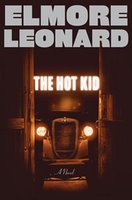
Elmore Leonard rarely does period pieces anymore (this being his first since Cuba Libre, '98,) but when he does, he does 'em right. The Hot Kid actually feels like a continuation of Cuba Libre, w/ many references to the prior books' setting, the Spanish/American war (main character Carl Webster's father was on the USS Maine.)

Much of The Hot Kid takes place in Tulsa and Kansas City in the early 1930s, intertwining the oil boom with the prohibition era to the depression and the rise of organized crime. Many real life characters are woven into the fabric of the story, like "Pretty Boy" Floyd, John Dillinger, Bonnie & Clyde, and even Tulsa and KC jazz pianist Jay McShann.

The music/soundtrack reflects both the era, and the change of setting from Tulsa (the folk/country-blues of Jimmie Rodgers and Maybelle Carter) to Kansas City (the jazz of Count Basie and Jay McShann.) Secretly, though, I think the mention of music in the novel's just an excuse to name-drop Gid Tanner's Skillet Lickers.

Those looking for the cool Leonard of his more popular crime novels (ie, Out of Sight, Rum Punch, Get Shorty, Be Cool,) need not stop here, but those that appreciated his early pulp novel work (and Cuba Libre, for that matter) will have a lot to love.

Previously
Novel Sndtrck: Glass Soup
Novel Sndtrck: White Apples
Novel Sndtrck: Kafka On The Shore (Ribaldry and Schmaltz's J Shifty)
Novel Sndtrck: Killing Yourself To Live (Drive Like Hell's Dallas Hudgens)
Novel Sndtrck: Drive Like Hell
Novel Sndtrck: Fortress of Solitude
James Frey's My Friend Leonard
Jonathon Lethem's The Disappointment Artist

tags: , , , ,

Friday, August 05, 2005

History of Hip-Hop: Babylon is Burning 1968-1977

Novel Soundtracks: Can't Stop Won't Stop - A History of the Hip-Hop Generation Broken into 4 parts (Loops)

Playlist: Loop 1 Babylon is Burning 1968-1977
Hip-hop is the voice of this generation. Even if you didn't grow up in the Bronx in the '70s, hip-hop is there for you. It has become a powerful force. Hip-hop binds all of these people, all of these nationalities, all over the world together.
—DJ Kool Herc, from the Introduction
Jeff Chang's comprehensive look at hip-hop is quite a read. It explores the intellectual roots, political movements, and society's ills in the formation of a full-fledged culture that is hip-hop. It's born, like steel and glass, in fire. Both the Bronx (NY, USA) and Trenchtown (Kingston, Jamaica) were ablaze with fires and saw music born of it's ashes. The following is just a 'cliff notes' of the musical-related aspects of the book - I recommend it highly for an in-depth look.

Jamaica had a national identity crisis following it's independence from Great Britain. From this rose Reggae, which as often is said, is rap music's elder kin. Leaders like Marcus Garvey and Ethiopia's Haile Selassie (pictured left) brought a rise in the black identity of youth (especially in the impoverished western Kingston ghettos - Back-O-Wall being the most prominent,) which became known as the Rastafari movement. These Rastafarians learned Burru drumming, an African art durvived from the days of slavery. Burru centered on the interplay of three drums, bass, alto and the repeater. In Jamaica, the repeater was mimiced by the 'DJ' which was their term for 'rapper.' In 1966, Back-O-Wall was demolished by the Jamaican Labour Party, ending in a blazing fire. A housing project named Tivoli Gardens was put in it's place and populated with JLP-friendly residents. "Two Sevens Clash," by Culture, sings of this divide.

In 1972, Perry Henzell's movie The Harder They Come (starring Reggae singer Jimmy Cliff) came out based on a real-life fifties Kingston outlaw. Both the movie's music and story helped frame Jamaica in the 1970's. The record label Island Records financed the movie, and head Chris Blackwell was so inspired by it's success, that he signed a struggling reggae band called the Wailers and tried to cross them over to a wider mainstream audience. For their Island debut (Catch a Fire, 1973) they brought in Muscle Schoals session guitarist Wayne Perkins and keyboardist Rabbit Dundrick to overdub tracks ("Concrete Jungle".)

About this time, a small backyard studio in Kingston called the Black Ark was cranking out imaginative sounding releases, and it's eccentric owner was Lee "Scratch" Perry. Perry used his analog machines to turn sounds over and back into themselves creating fragmented loops. Dub had already existed by this point, created by accident, legend has it, by Ruddy Redwood. Songs were often recorded on to exclusive acetates called 'dubplates' and one time an engineer forgot to pan up the vocals on the Paragons' hit "On the Beach" and Redwood used the uncorrected acetate to a dance that night and mixed between the vocal and the dub, sending the crowd wild. They began to use these 'vocal-less riddims' as b-sides, which was cheaper then recording another song, and they could be used by DJ's to rock patwa rhymes over. Thus 'dub' is born by accident, and a clear foreshadow of rap's riddims to come.

Dub became a force of political lyricism and African idealism, with Lee "Scratch" Perry at the helm for much of it. Artists making time in the dub scene were Max Romeo, Keith Hudson, Niney the Observer, Joe Biggs, Philip Smart, Harry Mundie, and the most influential dubmaster, King Tubby. During this time, politics and economic difficulties burdened Jamaica, and there was even an attempt on the life of Bob Marley, so he'd gone into exile. In 1977, he was brought back to headline a "One Love Peace Concert," uniting the warring sides under a peace treaty. That wouldn't last, however, and the Reagan-courted JLP helped spring a new wave of violence in 1980, with nearly 900 dying in election-year violence. In 1979, the Marley camp was being tailed by CIA operatives and Marely himself was diagnosed with cancer. By 1981, he was dead. In 1978, Perry's Black Ark (which had become a center for Boboshanti by that time) began to be dismantled. Perry shaved his dreads and sent away the Rasta groups. In 1983, Perry burned the studio to the ground.

The South Bronx was also ablaze, as slum lords repeatedly burned their properties for insurance when maintenance was needed - between 1973 and 1977, 30,000 fires were set in the South Bronx. How did this happen? The Cross-Bronx Expressway displaced 60,000 people, forcing them into housing projects in the south Bronx. White picket fences of the suburbs drew the white families while the working class poor got isolated concrete slab housing that became riddled with crime. The South Bronx was full of white (Jewish, Irish, Italian) youth gangs that preyed upon the new occupants, making them form their own gangs. These gangs were set up originally to protect their neighborhood: The Young Lords, Savage Skulls, and Savage Nomads. Soon though, they began fighting eachother. More gangs joined in, the Black Spades, the Bachelors, the Roman Kings, the Mongols... and the Ghetto Brothers, who tried to act as peacemakers (and musicians.) After a truce was reached, the Ghetto Bros. played Friday night block parties, which the kids loved to dress up and dance at - instead of gang'ing.

DJ Kool Herc (Clive Campbell) came from Jamaica in 1967 with his family and started DJing house parties before moving up to taking on these outdoor block parties. By 1974, Herc started noticing the kids waiting on certain drum breaks (ex. "Get On The Good Foot " by James Brown live on Sex Machine & "Fencewalk" by Mandrillto) to make their moves, and he zeroed in on what was becoming the heart of the song - the break. He began looping two of the same album together in a technique he called the merry-go-round - extending a five-secon break into a much more danceable length of sequence of loops. The dancers got a name from Herc too, he called them break boys, or b-boys for short. By 1977 competitors lined up for Herc's crown, with a grid setup not unlike the gangs in prior years - Grandmaster Flash had a grid as did former Black Spade Afrika Bambaataa (with his Zulu Nation.)

Next: Loop 2 Planet Rock 1975-1986
Loop 3 The Message 1984-1992

More: Jeff Chang's blog

Novel Soundtracks is intended as a soundtrack for a novel/book that is being read and can also serve on it's own as a music playlist. Songs referenced in the book are put into a playlist.

Previously:
Novel Soundtrack: Kafka On The Shore (Murukami)
Novel Soundtracks: Killing Yourself To Live (Klosterman)
Novel Soundtracks: Drive Like Hell (Hudgens)
Novel Soundtracks: Fortress of Solitude (Lethem)
Jonathon Lethem's The Disappointment Artist

tags: , , , , , ,